The Best Time of Day to Shoot in Spain (And Why It Is Later Than You Think)
Most photoshoot advice tells you to shoot at golden hour and leaves it there. In Spain that advice is incomplete in a way that quietly ruins plans, because Spanish clocks do not match Spanish geography.
Spain is an hour ahead of where the sun thinks it is
Spain sits at roughly the same longitude as Britain, but keeps Central European Time — the same clock as Poland. The country has been on that clock since 1940 and never moved back. Everything about the day is shifted late as a result: dinner at 22:00 makes sense once you understand that the sun is still up.
For a photoshoot this has one very concrete consequence. In June, the sun sets around 21:45 in Madrid and 21:25 in Barcelona. Golden hour is therefore roughly 20:45 to 21:45 — not late afternoon, not "around seven". If you booked a summer session for 18:00 expecting soft light, you booked three hours of harsh overhead sun.
In December the same cities lose the sun around 17:50 and 17:20. The whole usable day compresses, but the light is gentle from mid-afternoon onward, which makes winter a far easier season to shoot in than people assume.
The four windows, and what each is good for
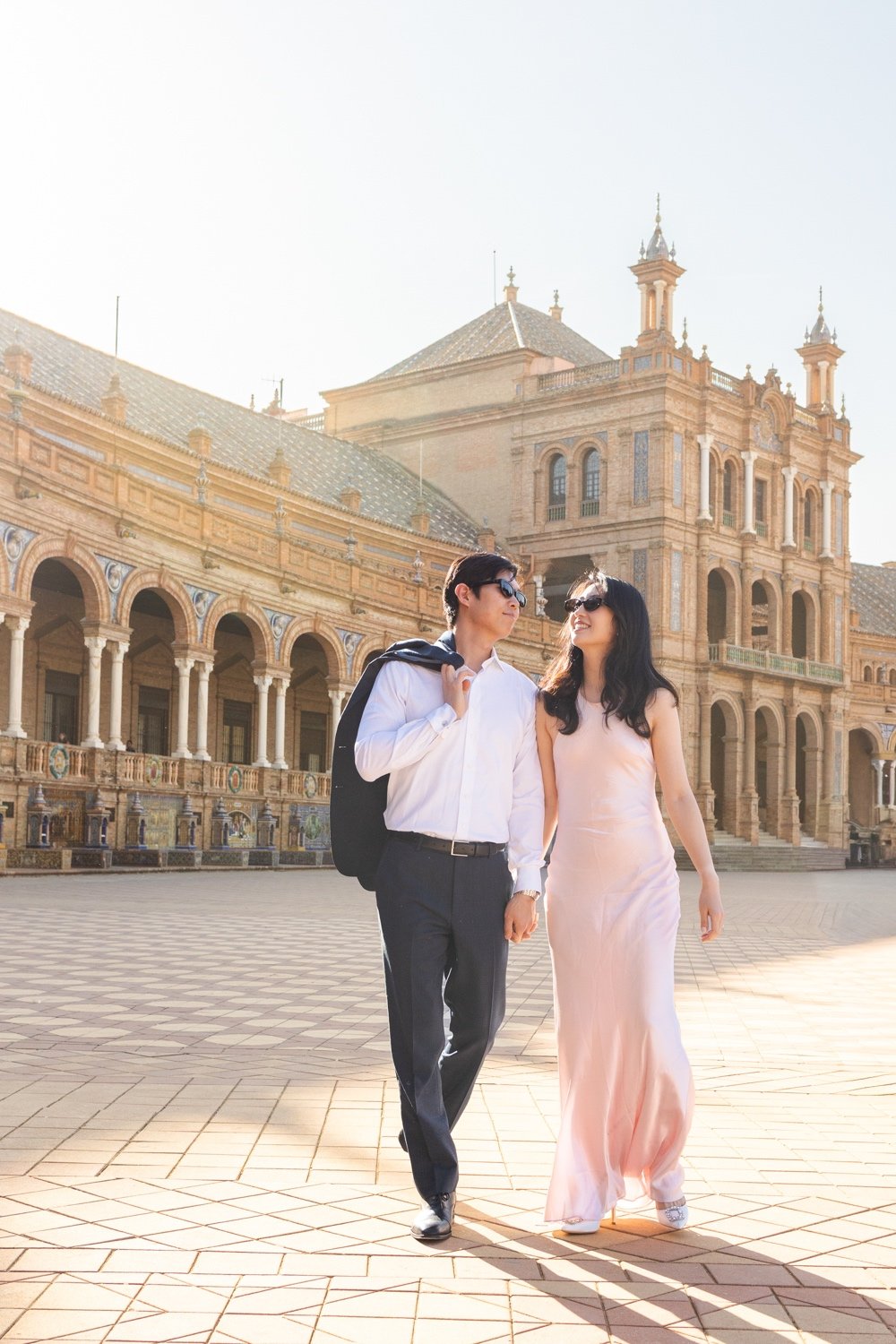
Sunrise. The single most underused hour in Spain. In summer it is the only time major locations are genuinely empty — Bunkers del Carmel, Plaza de España in Seville, the Alhambra viewpoints in Granada. The light is the same quality as evening golden hour. The only cost is getting up, and in July that means about 07:00, which is not as brutal as it sounds.
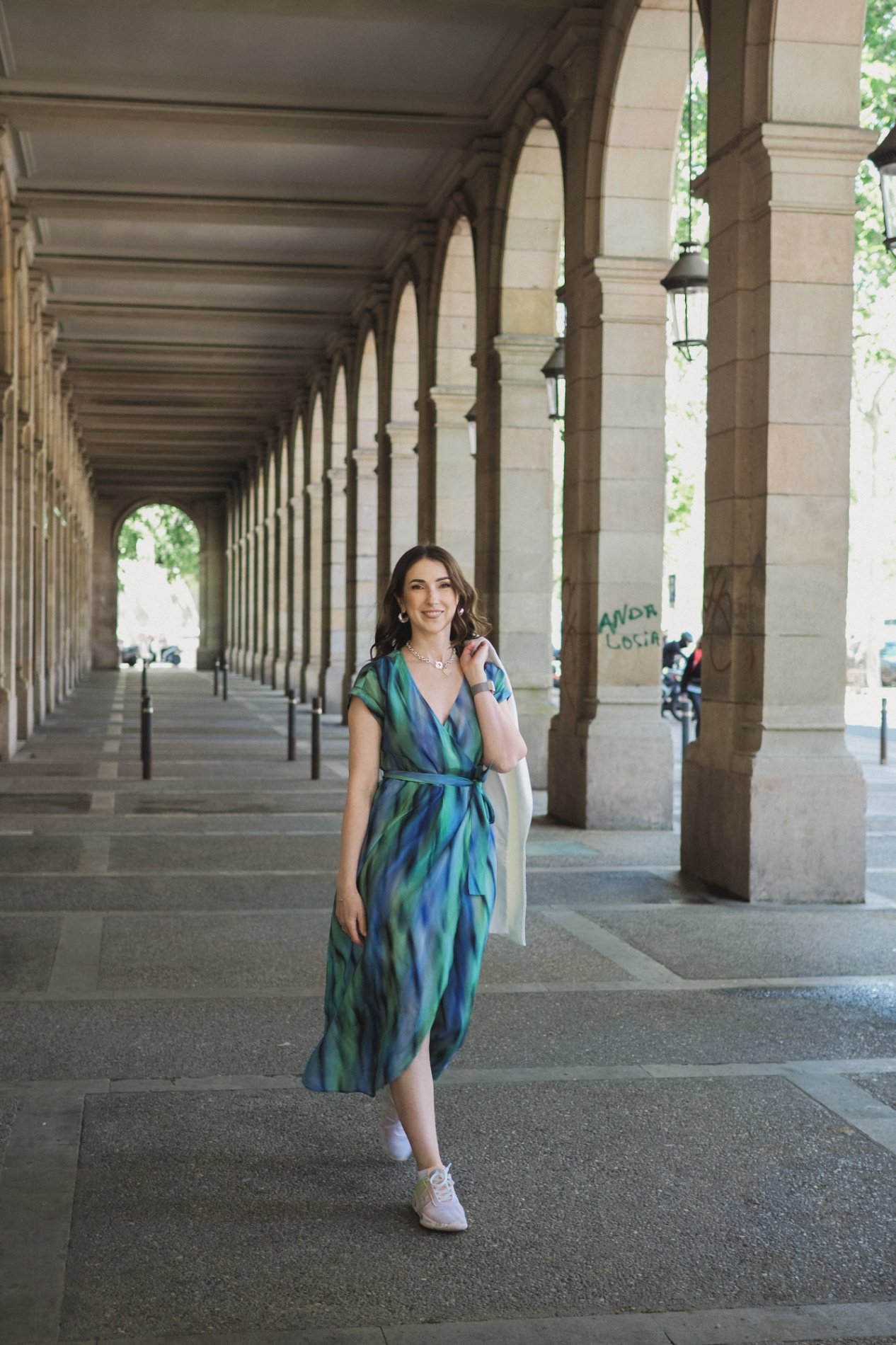
Mid-morning. Good for narrow old-town streets — the Gothic Quarter in Barcelona, Santa Cruz in Seville, the Albaicín in Granada — because high walls keep direct sun off the ground and give you soft bounced light. Bad for open squares and anything white or tiled, which starts to glare.
Early afternoon. Objectively the worst light of the day, and in Andalusian summer it is also dangerous: Seville and Córdoba regularly clear 40°C in July and August. The one thing this window is genuinely good for is shade. Deep lanes, courtyards, gardens with tree cover. In Barcelona that means Parc de la Ciutadella; in Seville, the alleys of Santa Cruz.
There is also a crowd effect worth exploiting. Andalusian old towns empty out in the early afternoon heat, so a shaded lane that is impassable at 11:00 can be yours at 15:00.
Golden hour and after. The obvious answer, with the caveat above about when it actually falls. Worth adding: Spanish cities light up well after sunset, and the twenty minutes of blue hour after the sun goes gives you a completely different set — warm windows, lit facades, a deep blue sky rather than a black one.
City by city
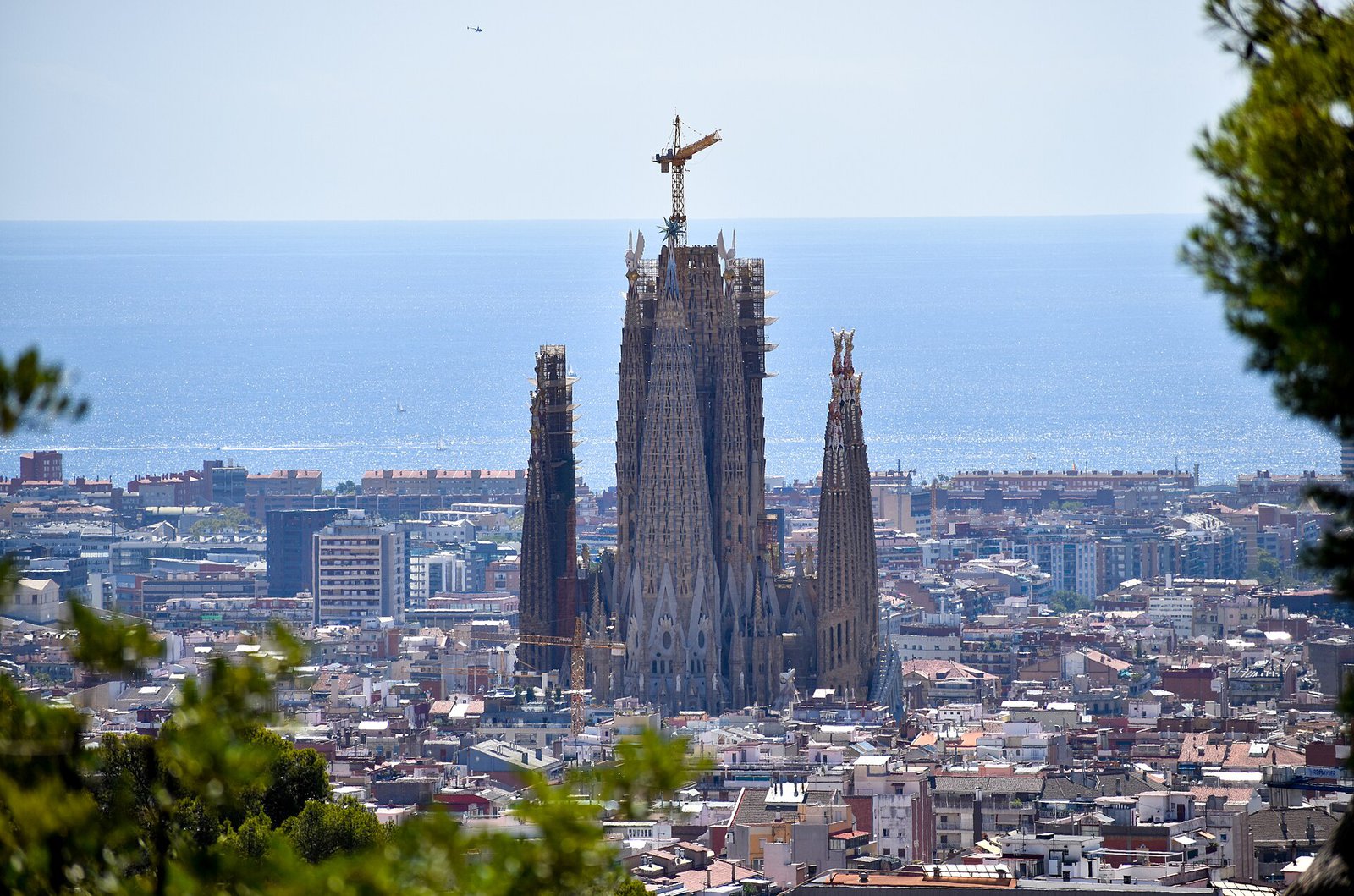
Barcelona. Beach faces southeast, so the sea is lit at sunrise and the city is lit at sunset. Decide which of those you want before you pick a time. Hillside viewpoints work at both ends of the day.
Madrid. The Templo de Debod is a sunset location and not much else — it is positioned so the sun goes down behind the temple, over the Casa de Campo. Retiro park works all morning; the Crystal Palace interior is best when the sun is high enough to come through the glass.
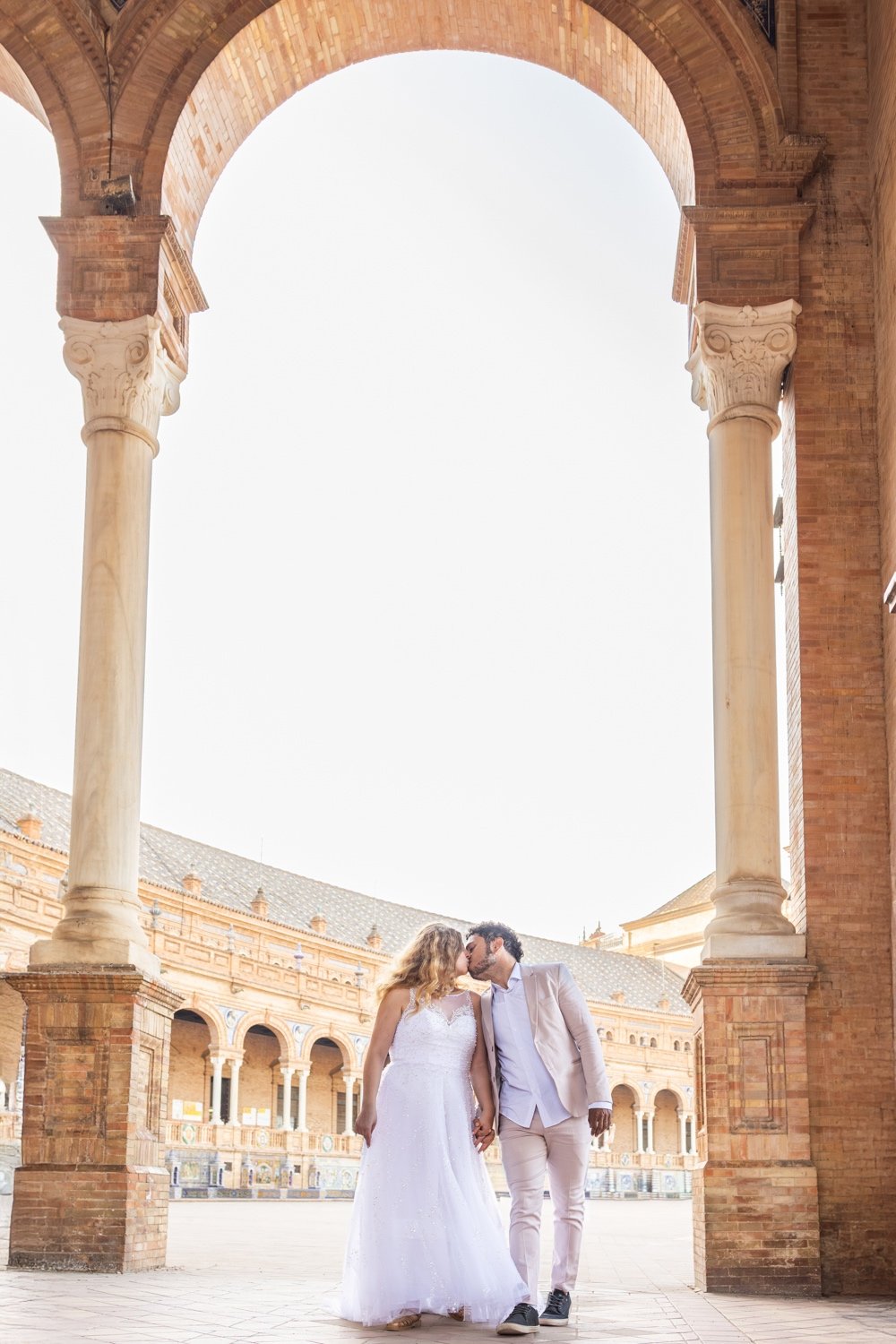
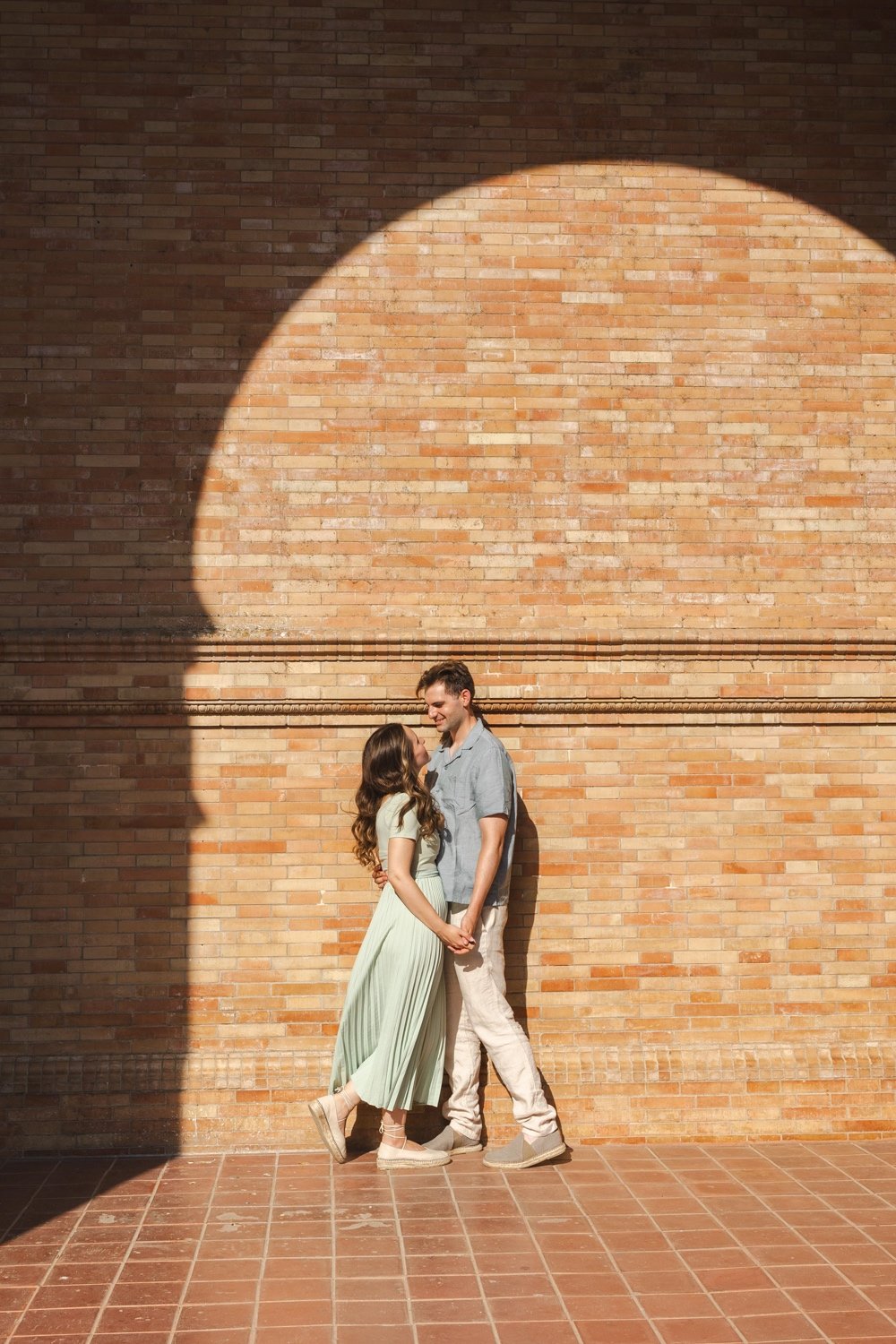
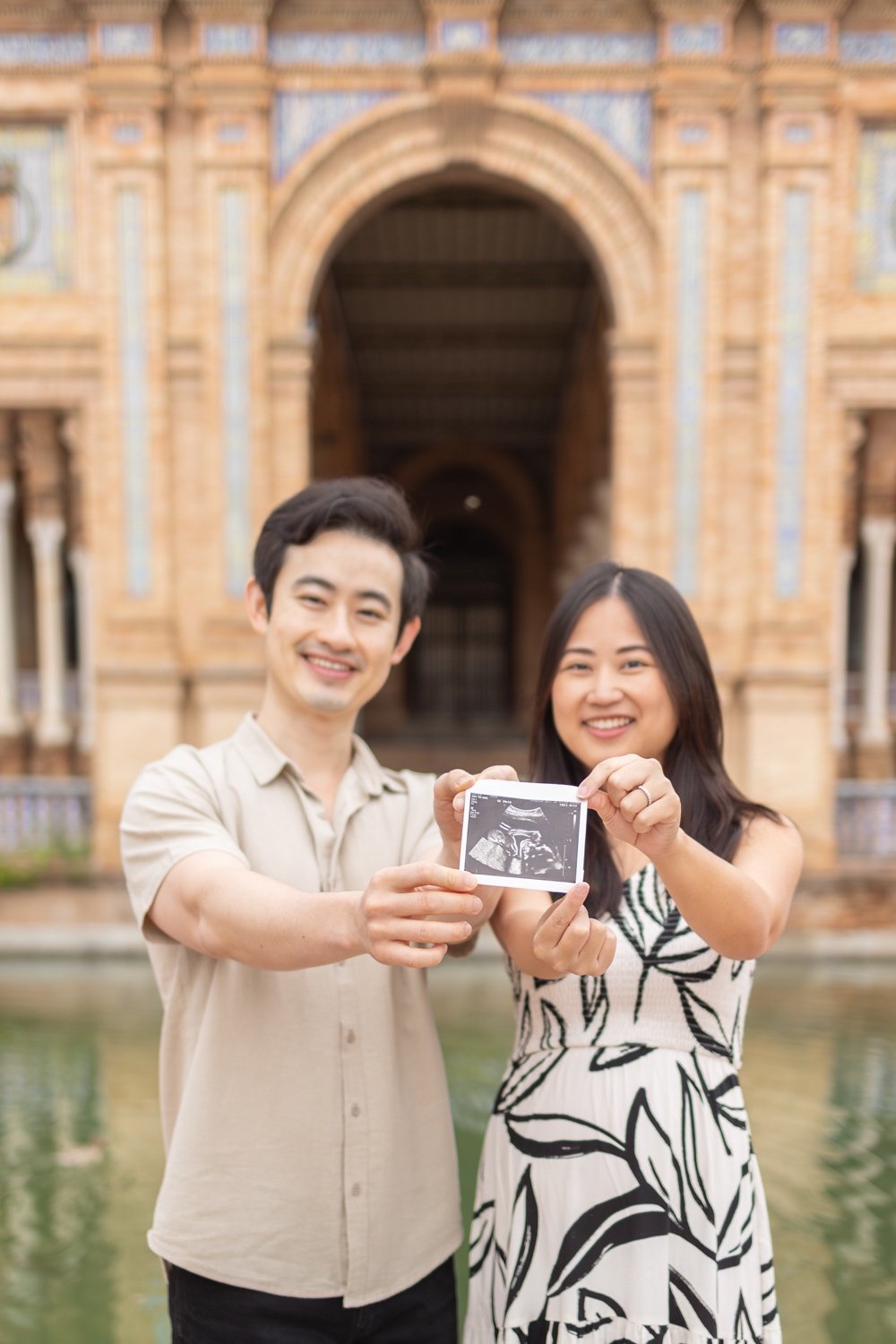
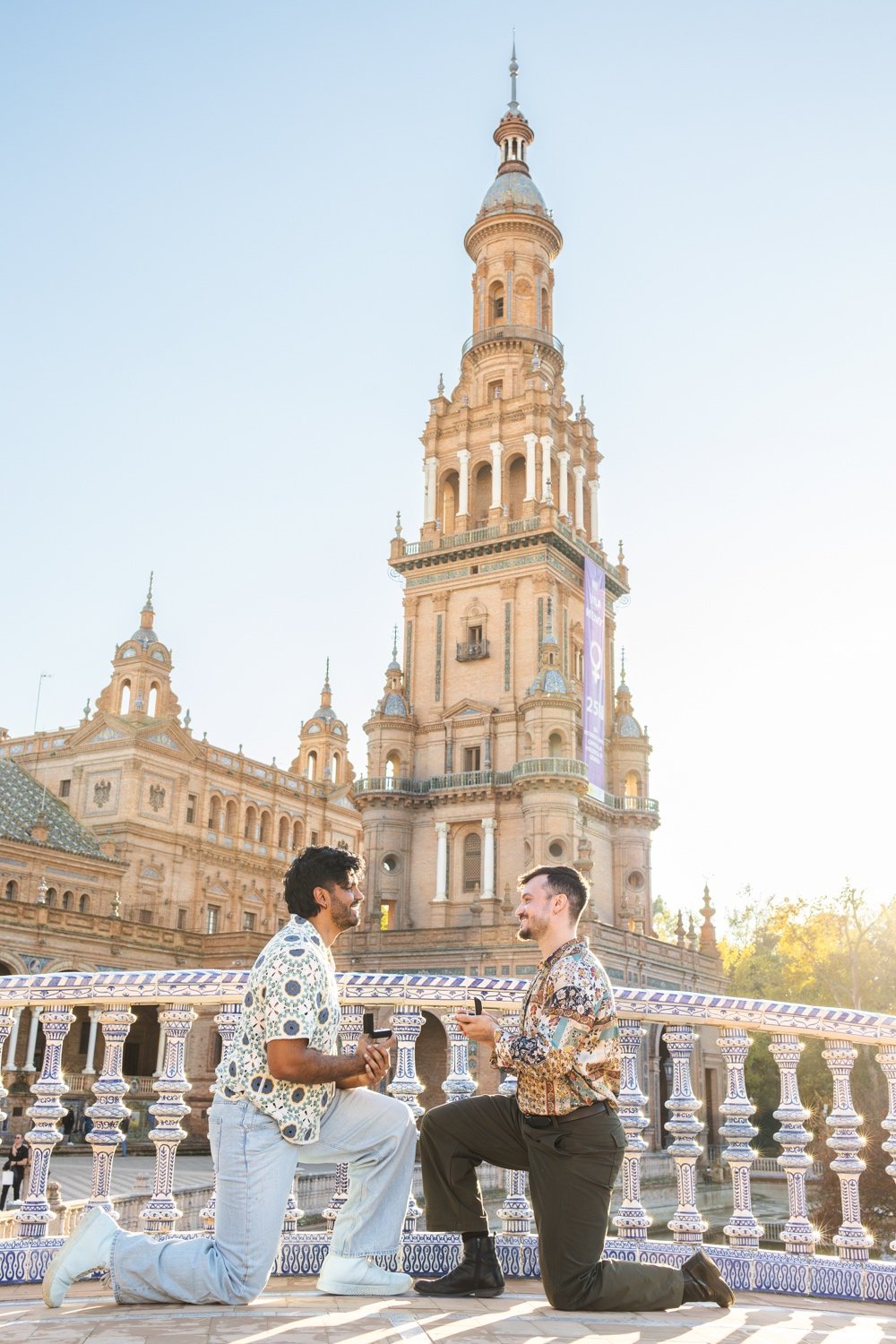
Seville. The Plaza de España is the trap. It is a brick semicircle facing an open space, and by mid-morning the brickwork glares hard. Early morning is the answer — and it also gets you the plaza before the tour buses. Pair it with Santa Cruz afterwards, since those whitewashed lanes hold up at midday when the plaza no longer does.
Granada. The Alhambra is best seen from across the valley at the Mirador de San Nicolás, looking east. That means sunset light lands on the palace face while you shoot from the shaded side. It is one of the few places where the classic time and the correct time genuinely agree.
The islands. Mallorca, Menorca and the Canaries have a different problem: the light is excellent but the wind is not. Coastal coves are frequently better in the morning before the afternoon breeze picks up, especially if hair and fabric matter to the shot.
What clients say about this kind of shoot
What can we say about Dani except that he is the best. He did an amazing job catching all of our special moments (and there were A LOT of them) and, more importantly, making us and our guests feel completely comfortable and relaxed throughout the whole wedding. My husband and I are not the most photogenic couple and always get nervous in front of a camera, but we had such a fun time with him that we were able to relax and got a lot of wonderful shots. We recommend him to everyone who will listen, because you simply can't go wrong with Dani as your photographer. Thank you again!
— Ariana Cerdera on Daniel G.
Daniel captured our Indian wedding day so beautifully! The photos turned out amazing, and he managed to catch so many special, candid moments throughout the day. We are absolutely thrilled with his work. Thank you so much, Daniel!
— Arjun Lotay on Daniel G.
Well, I hired him for my wedding day and without a doubt it's one of the best decisions of my life ❤️ Dani has magic in his hands — his work is genuinely STUNNING. He was wonderful to deal with, he understood exactly what I wanted, and whatever I had imagined my photos would look like, Dani went far beyond it. Your photos make people cry, and looking at them takes you straight back to the moment. All I can say is that I'd choose you a thousand times over, and a million thanks for making such a beautiful day stay with us forever.
— Client on Daniel G.
It was a great experience for the family pictures. Great communication and engaging with kids.
— Alexandra on Dau S.
What an amazing experience we had with Dau! She was on time, ready to go, prepared to keep our belongs safe, and so personable. Her assistant, her mother, was also so sweet and kind. If you are looking to savor some memories this is the photographer to use!!!
— Stephanie on Dau S.
Having Daniel for our daughter's christening was one of the best decisions we've made — not only because of how kind he is, but because he managed to put everything we lived that day into pictures. The quality of the photos, and how natural they feel, is what we liked most. Thank you so much for the wonderful job you did.
— Rocío Ruix on Daniel G.
Season matters more than most people expect
April to early June is the best all-round window in mainland Spain: long days, mild temperatures, everything green rather than burnt. In Córdoba, early May is also when the flower-filled patios are open.
July and August are for sunrise sessions and coastal locations. Inland Andalusia in the middle of the day is not a photoshoot, it is an endurance test.
September and October give you summer light without summer heat, and the sea is still warm enough for beach sessions to be pleasant rather than theoretical.
November to February is short but genuinely good. The sun stays low all day, which means soft directional light from mid-afternoon, empty locations, and the lowest prices of the year. The Canaries in winter are a separate case entirely — reliable sun when the mainland is grey.
The practical version
If you remember one thing: check the actual sunset time for your date and city, then count back an hour. Do not rely on what golden hour means where you live. Spain's clock will mislead you by two to three hours in summer, and that is the difference between the photos you imagined and a set of squinting faces.
Every photographer on Photo Spain plans sessions around this as a matter of routine — if you tell them your date and the city, the timing recommendation comes back before anything else does. You can also browse locations across Spain to see what each region offers before committing to a city.
Frequently asked questions
What time is golden hour in Spain in summer?
Roughly 20:45 to 21:45. Spain sits at about the same longitude as Britain but keeps Central European Time, so in June the sun sets around 21:45 in Madrid and 21:25 in Barcelona. A summer session booked for 18:00 expecting soft light gets three hours of harsh overhead sun instead — check the actual sunset time for your date and city, then count back an hour.
Is sunrise worth getting up for on a Spanish photoshoot?
In summer it is the single most underused hour in the country. It is the only time major locations are genuinely empty — Bunkers del Carmel, the Plaza de España in Seville, the Alhambra viewpoints in Granada — and the light is the same quality as evening golden hour. In July that means about 07:00, which is not as brutal as it sounds.
Can you shoot in the middle of the day in Spain?
Only in shade. Early afternoon is objectively the worst light of the day, and in Andalusian summer it is also dangerous, with Seville and Córdoba regularly clearing 40°C. What works is deep lanes, courtyards and gardens with tree cover — Parc de la Ciutadella in Barcelona, the alleys of Santa Cruz in Seville — and the crowd effect helps: a shaded lane that is impassable at 11:00 can be yours at 15:00 when the old town empties out in the heat.
Want professional photos in Seville?
Browse portfolios, compare packages, and book a verified local photographer in minutes.