Christmas in Spain: Málaga's lights, Madrid's squares and a warm December
Spain does Christmas outdoors. The south sits at sixteen to eighteen degrees through December, the squares stay full into the evening because nobody needs to be indoors, and the country's two best seasonal frames — a light show on a shopping street in Málaga and a wooden market under the arcades of Madrid's Plaza Mayor — are both free to walk into. What you have to plan around is the clock: the sun goes down around half past five in the south and closer to half past five in Madrid too, and the whole thing happens in the hour either side of that.
The hour: sunset, then thirty-five minutes
Whatever the city, aim for the last daylight and the blue half hour that follows. The lights are switched on while the sky still holds blue, and for around half an hour the two are of equal strength — faces lit from the front, stone still warm, sky reading blue rather than black. After that the sky goes black and the lamps burn out against it.
A sixty-minute session covers one thing well: a square, a street, one light installation. Two hours lets you start in daylight somewhere architectural and finish in the lights, which is the shape we suggest for families — the cold part, such as it is, lands at the end.
Málaga: the light show people plan a trip around
Málaga turns Calle Larios into a staged show: an arched canopy of lights over the whole street, switched on with music several times an evening from late November to early January. It is not a string of bulbs, it is choreography, and the street fills for it — the crowd is the one difficulty, not the light.
The way to photograph it is to avoid the show times. Larios is lit all evening; the music sets are when the street becomes impassable. Go before the first set or between two of them, work the far end of the street where the canopy still reads but the crowd thins, and use the side streets — Calle Granada, the cathedral surroundings — for everything that needs space. The Alcazaba and the Roman theatre above the old town are floodlit and almost empty at that hour.
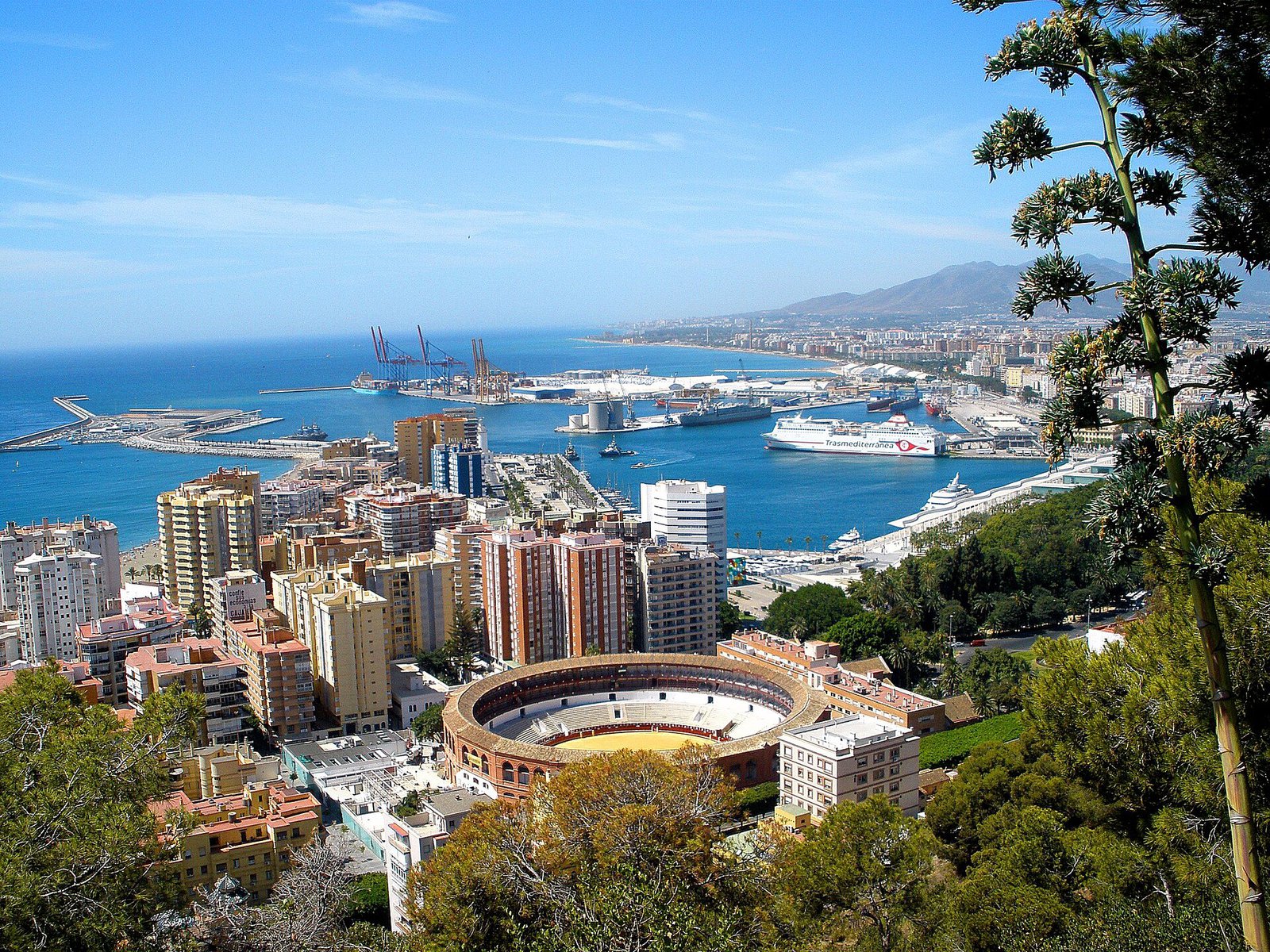
Málaga also has the mildest December of any Spanish city on this list. Eighteen degrees at four in the afternoon is normal, and the beach at Malagueta is usable for a session in a way no other European coast is in December.
Madrid: the squares, the arcades, the Gran Vía
Madrid is colder — single digits after dark — and worth it. Plaza Mayor holds the traditional Christmas market under its arcades through December: wooden stalls, nativity figures, and the arcade itself as a frame that hides the crowd behind a column. Puerta del Sol and the Gran Vía carry the big light installations, and the Gran Vía at blue hour, with its 1920s façades lit and the traffic streaking, is the most cinematic frame the city offers all year.
For quiet, go to the Retiro in the morning: bare trees, the Palacio de Cristal, and mist on the pond on a cold morning. The Templo de Debod at sunset is the city's classic, and in winter the sun sets right behind it.
What clients say about this kind of shoot
Seville, Granada, Barcelona
Seville in December is fifteen to eighteen degrees and nearly empty: Plaza de España, the Barrio de Santa Cruz and the streets around the cathedral without the coach groups, plus lit avenues in the centre. Christmas in Andalusia runs long — the nativity scenes, the belenes, are a tradition in themselves and are set up in churches and civic buildings all over the region.
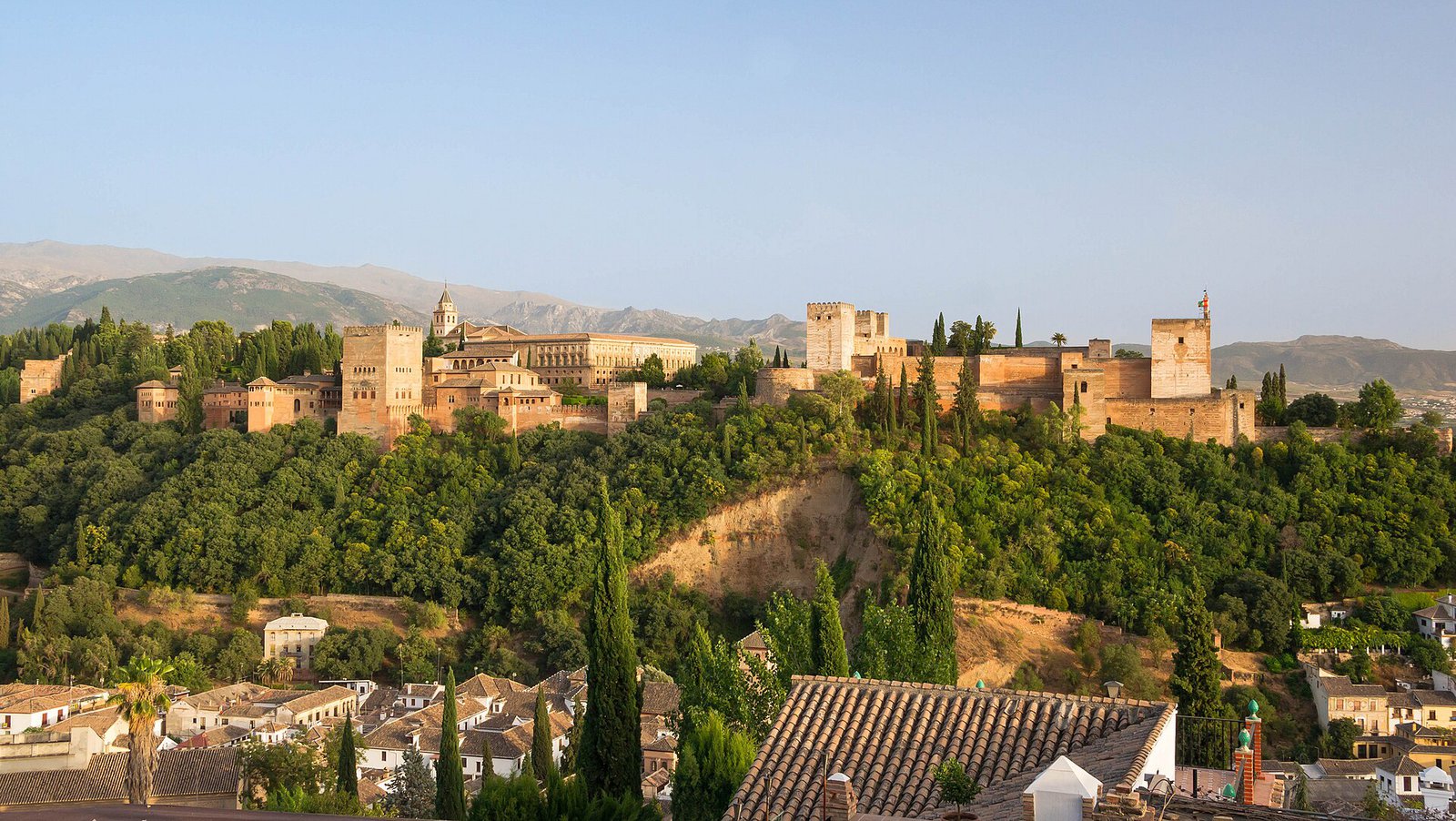
Granada adds snow without asking you to stand in it: the Alhambra with the Sierra Nevada white behind it is a December-to-March picture only. Barcelona lights Portal de l'Àngel and Passeig de Gràcia and holds the Santa Llúcia fair by the cathedral, and its December advantage is the same as Madrid's — the sights are walkable again.
What December actually asks
Layers, not parkas, in the south; a proper coat in Madrid and Granada after dark. Saturated colours photograph better than technical outerwear under warm light — burgundy, camel, forest green, navy — and white turns orange under Christmas lamps. Bring shoes with grip for wet marble and polished pavement, which is what most Spanish city centres are made of.
Two calendar notes. 5 January is the Cabalgata de Reyes, the Three Kings parade, which closes central streets in every city and is the busiest evening of the Spanish Christmas; a photoshoot that evening means choosing a neighbourhood away from the route. And the days between Christmas and Epiphany are a domestic holiday season — the squares are at their fullest, and hotels charge for it.
Everything above is public space. Light shows, markets and monuments have their own rules and their own dates, both of which change each year; anything that looks like a production is worth asking about first.
Booking a December session
The mild south fills up first: Málaga, Seville and Granada take December bookings early, especially the weekends. Madrid and Barcelona are easier, and the first half of December is easier than the second everywhere.
Through Quick Booking, a family or couples session starts at €310 all-inclusive for sixty minutes and €470 for two hours. A proposal under the Larios canopy or at the Templo de Debod at sunset is the seasonal version of the request we get most. You can browse photographers and book online, and how it works explains the rest.