A Family Photoshoot in Andalusia: Seville, Granada and Córdoba
Andalusia has the longest family-photo season in Spain and it runs almost exactly opposite to the rest of Europe's: October to April is the good half of the year, and July and August are the two months to avoid. In high summer Seville and Córdoba sit between 38 and 42°C, and no four-year-old lasts twenty minutes in that. Book the same hour in late October and you get soft low sun, empty squares and children who are still cheerful at the end of it.
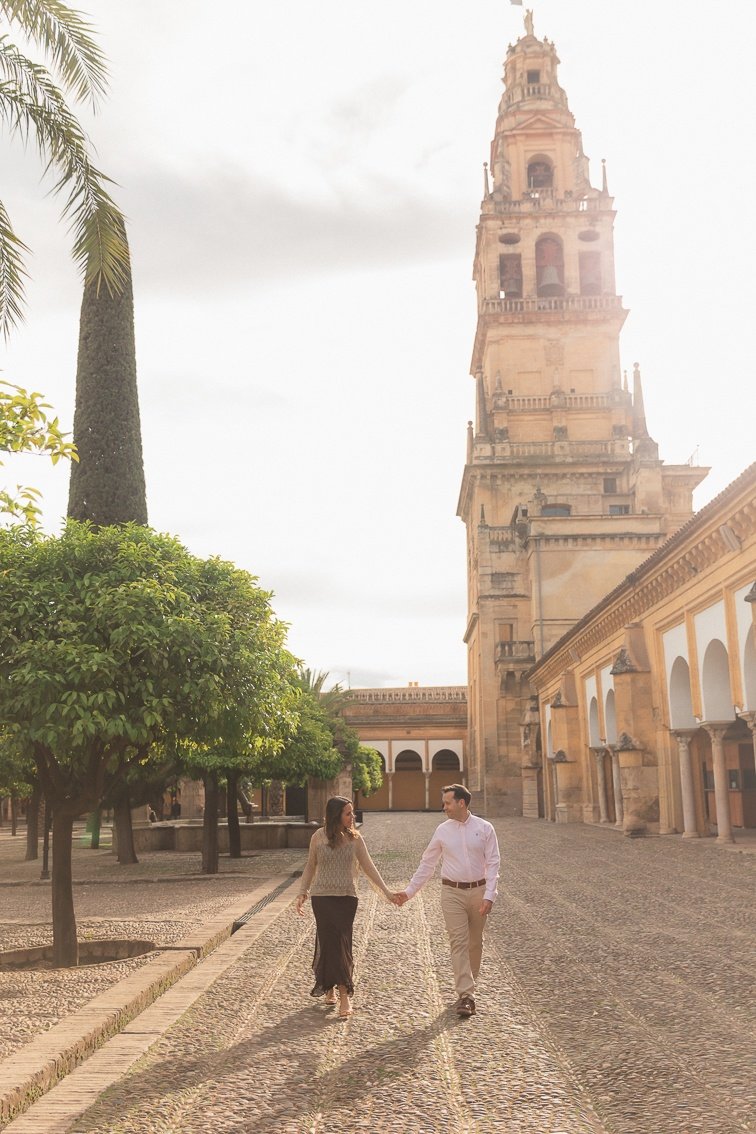
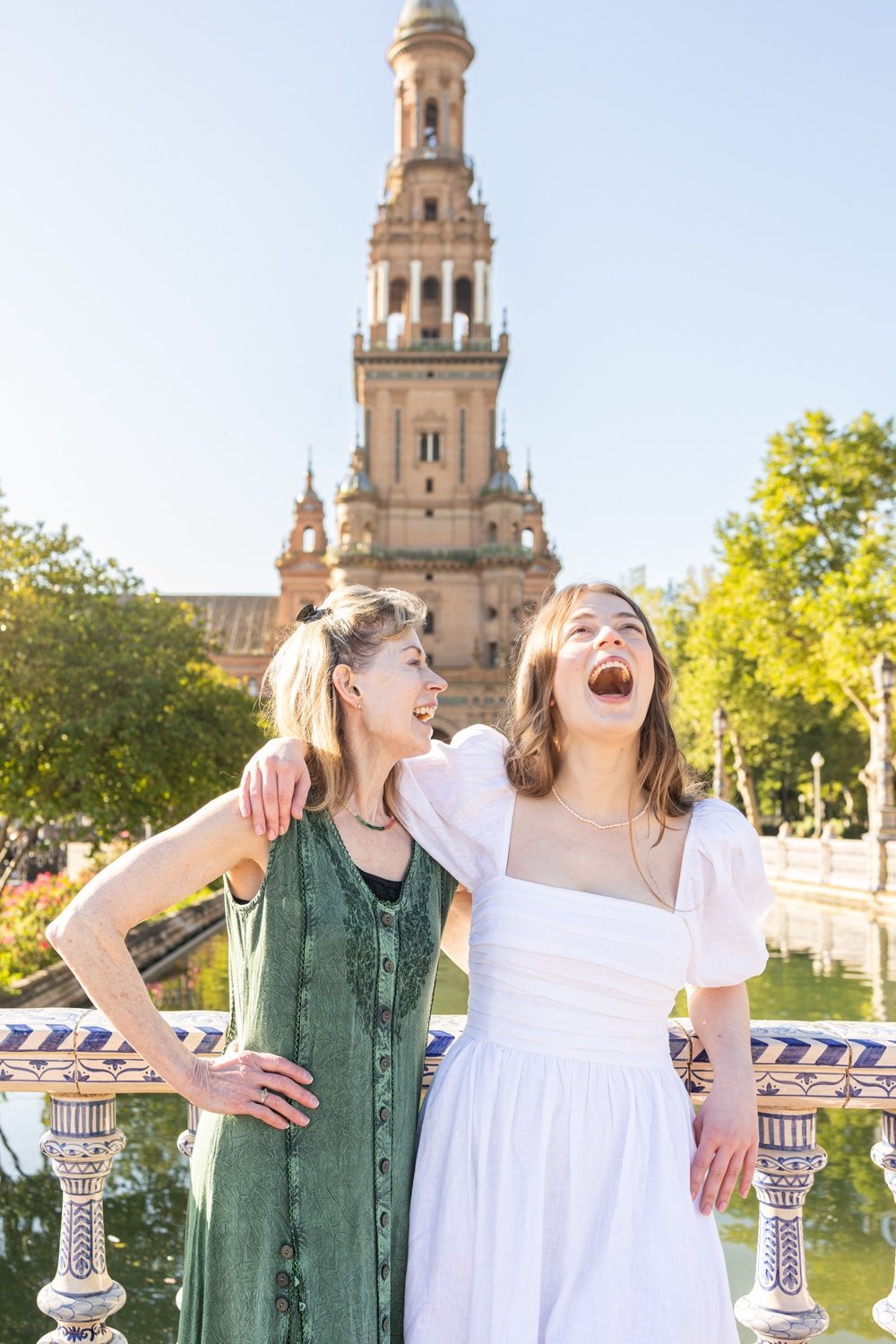
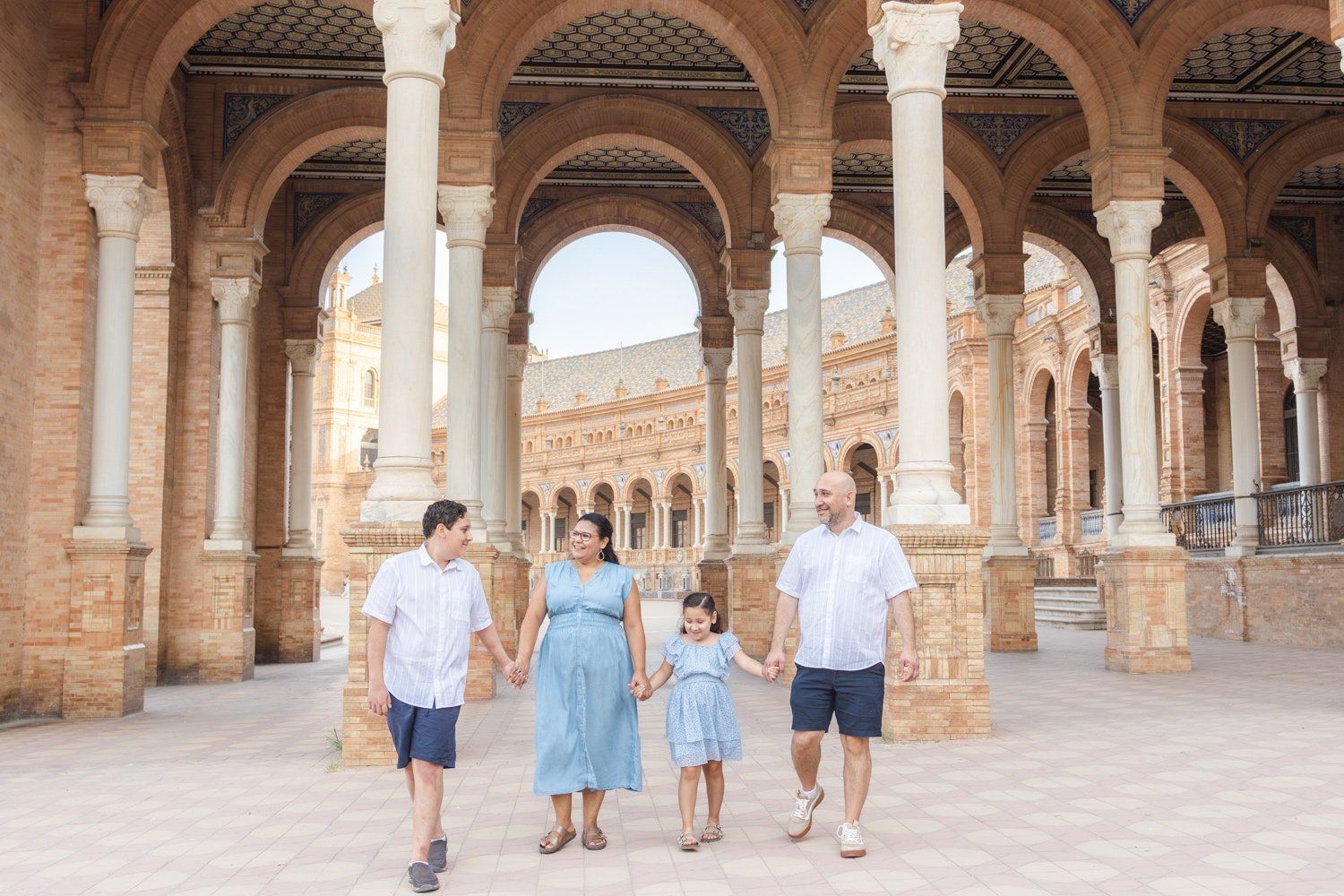
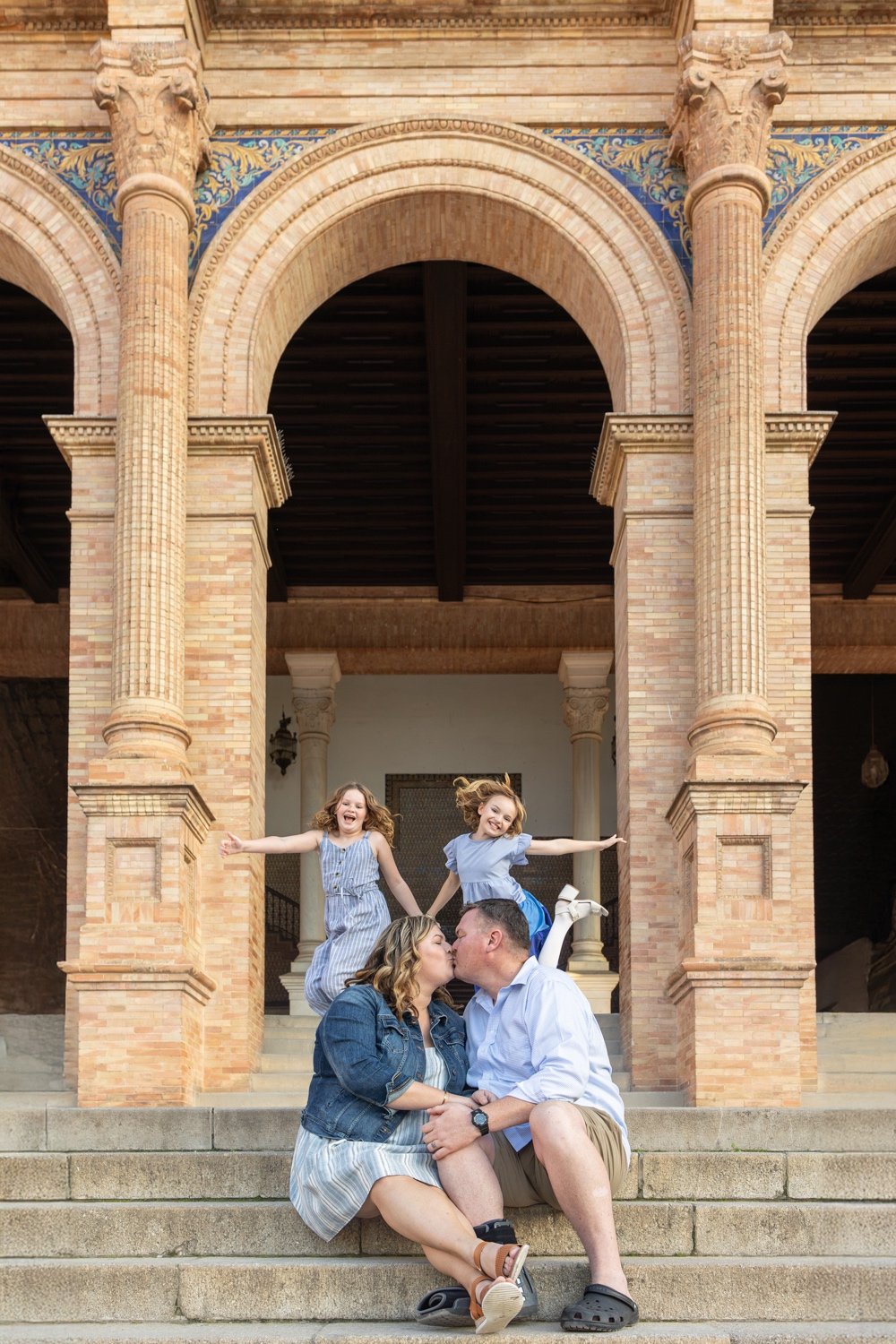
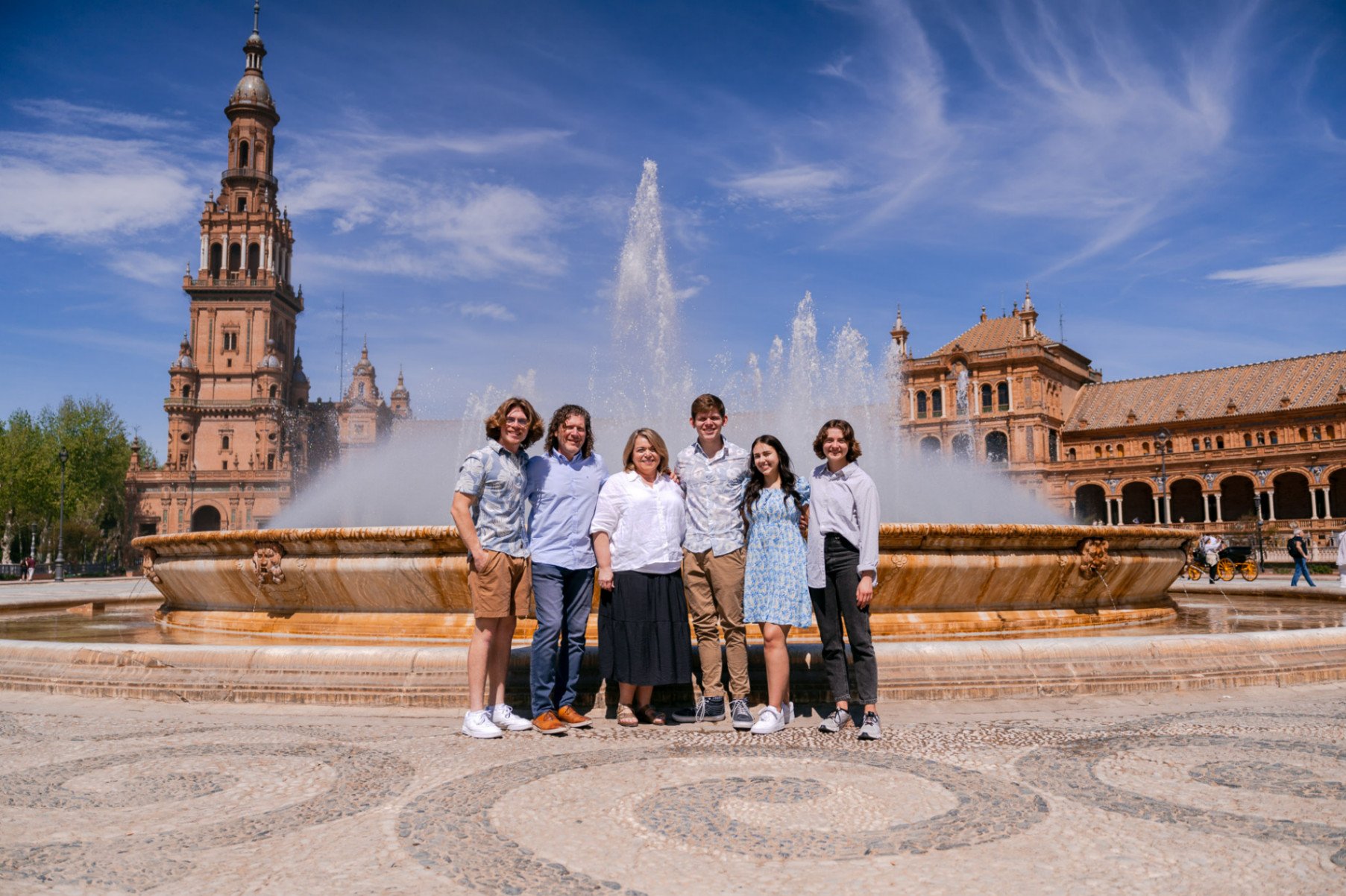
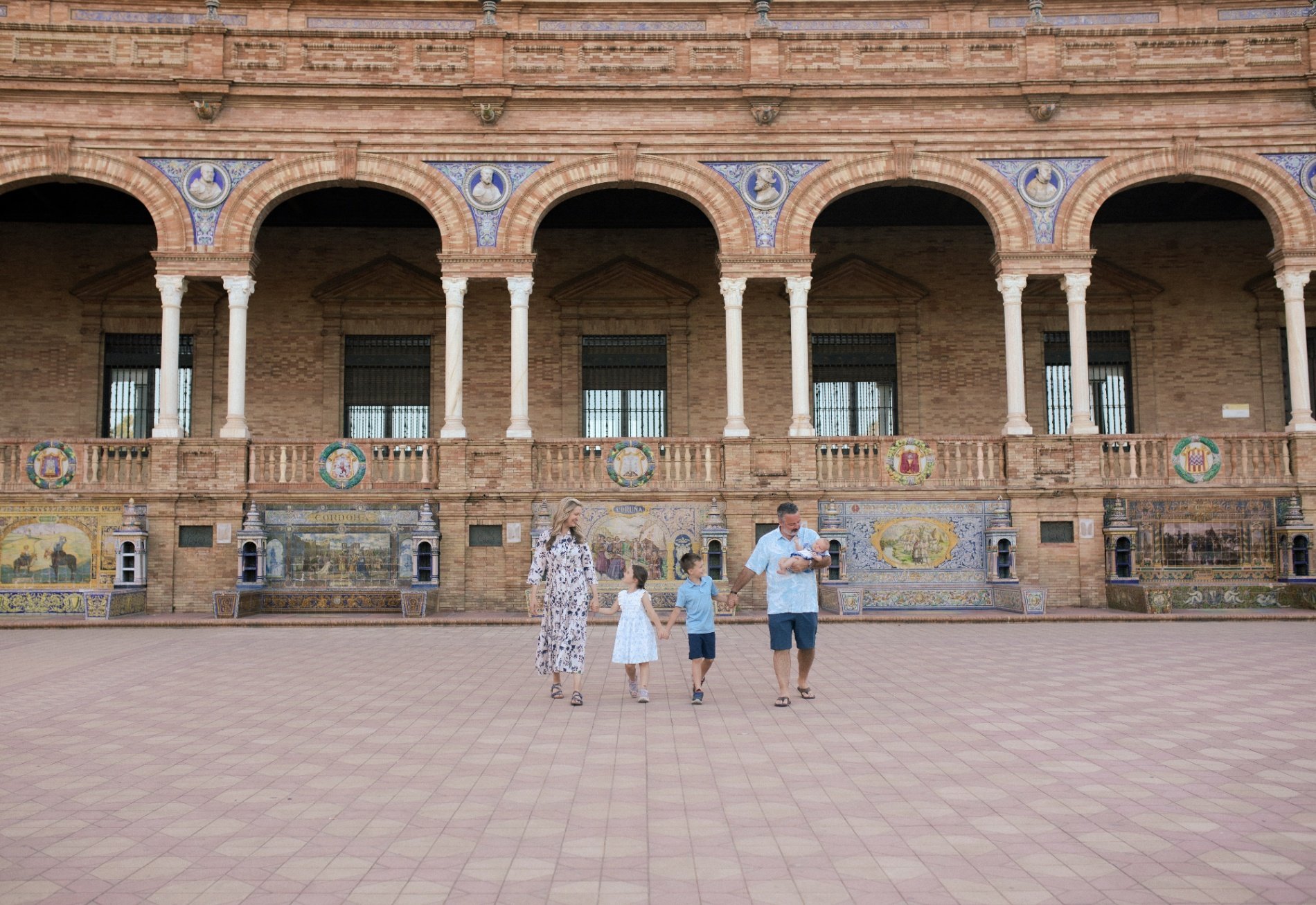
Real shots from Seville
Why autumn and winter are the season here
The heat breaks in late September. Through October and November the three inland cities settle at 22 to 27°C in the afternoon, the sun stays low enough all day that the light is usable outside golden hour, and the orange trees are still full.
The other thing October does is move dinner. The clocks change on the last Sunday of the month, and sunset in Seville goes from about 19:45 in mid-October to around 18:25 on the first of November. That matters more with small children than anything else on this page: a golden-hour session in November finishes before six, which is before dinner and well before bedtime, instead of after both.
Winter is the surprise. Seville and Córdoba stay around 16 to 18°C at midday in January, which is shirt-sleeve weather for a session. Granada is the exception — it sits at over seven hundred metres with the Sierra Nevada behind it, and January mornings there are genuinely cold. Book Granada for late morning in winter, not for eight o'clock.
Seville: the flattest city of the three
Seville is the easiest of the three with a pushchair or a grandparent, because the centre is flat.
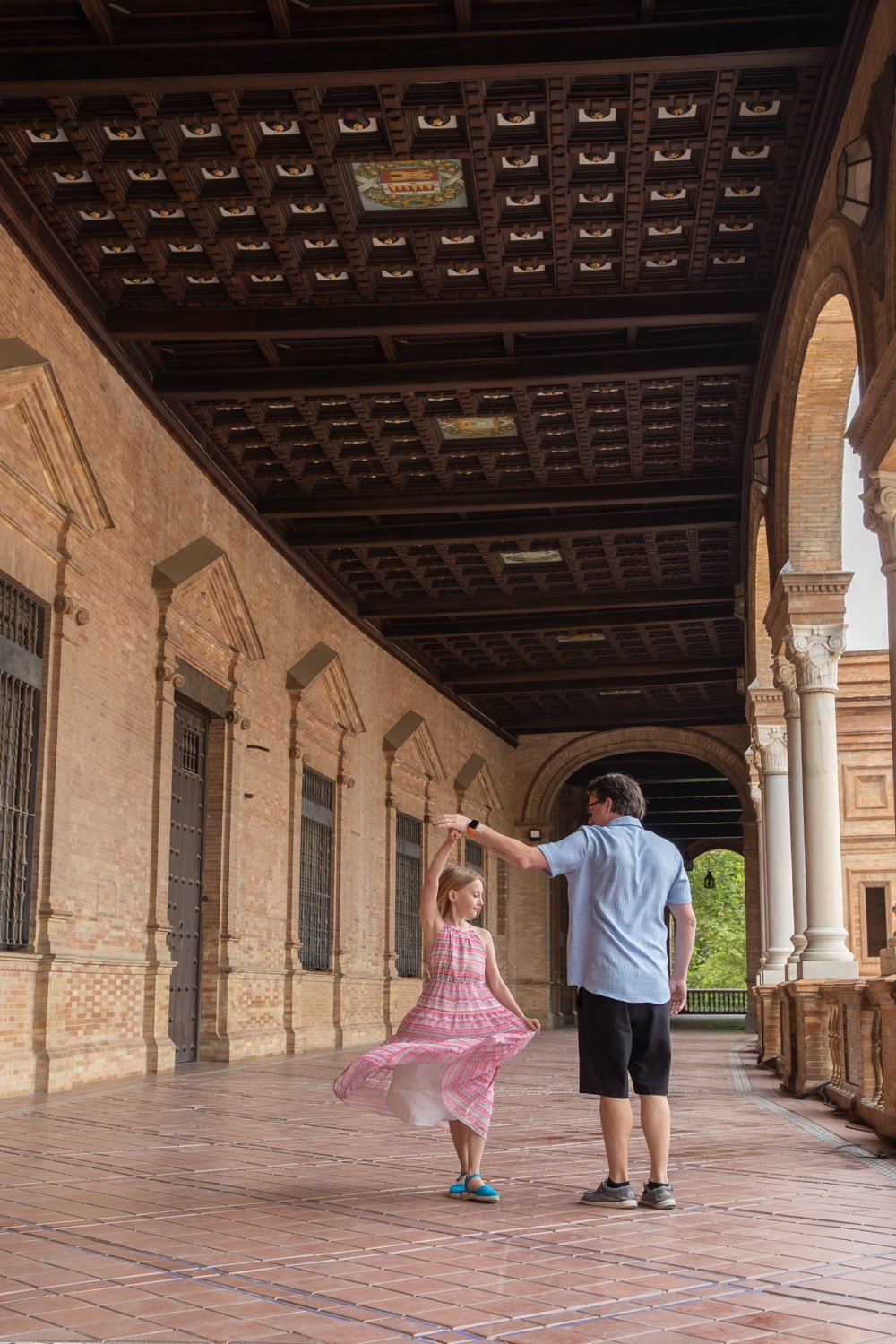
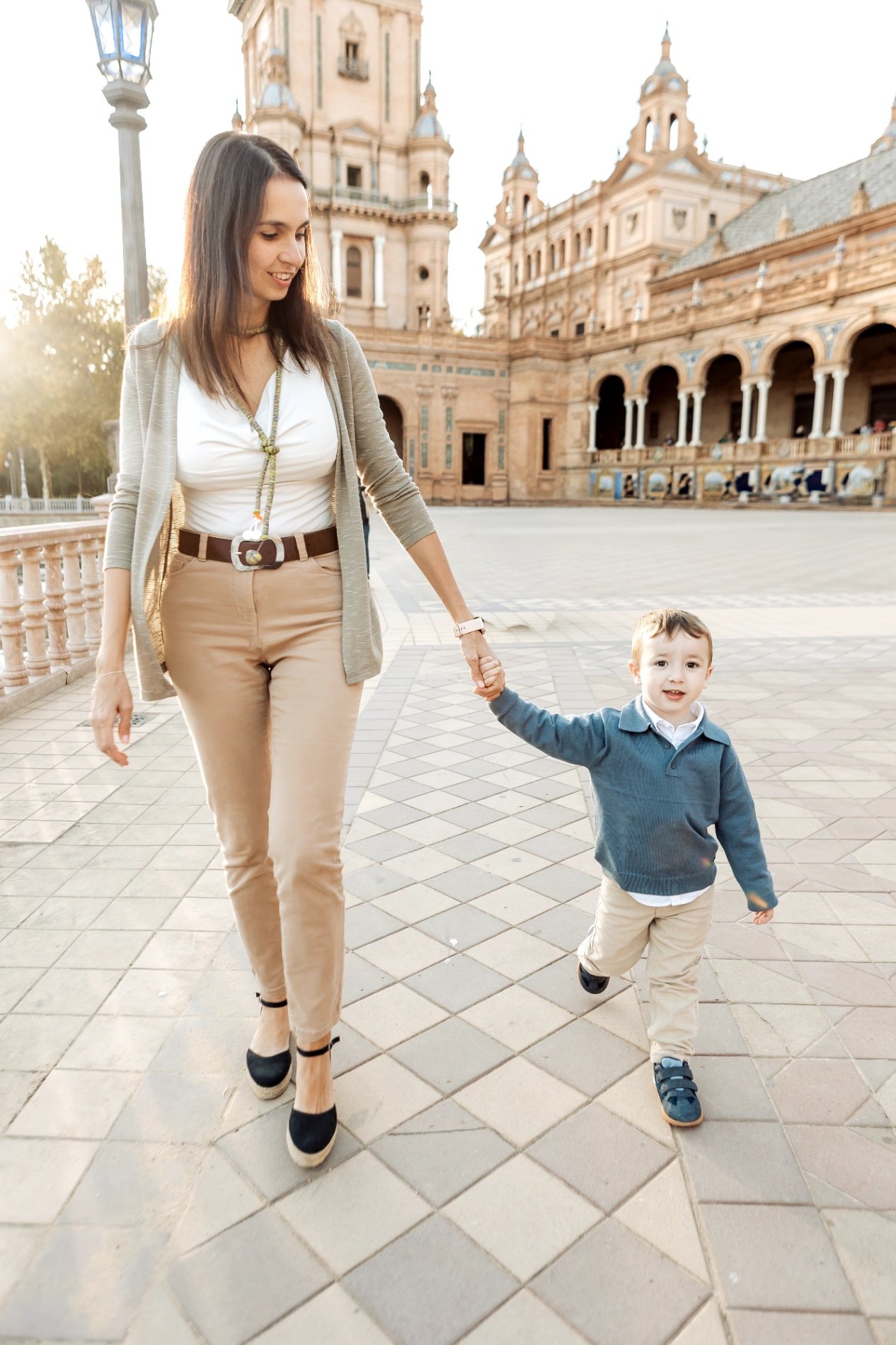
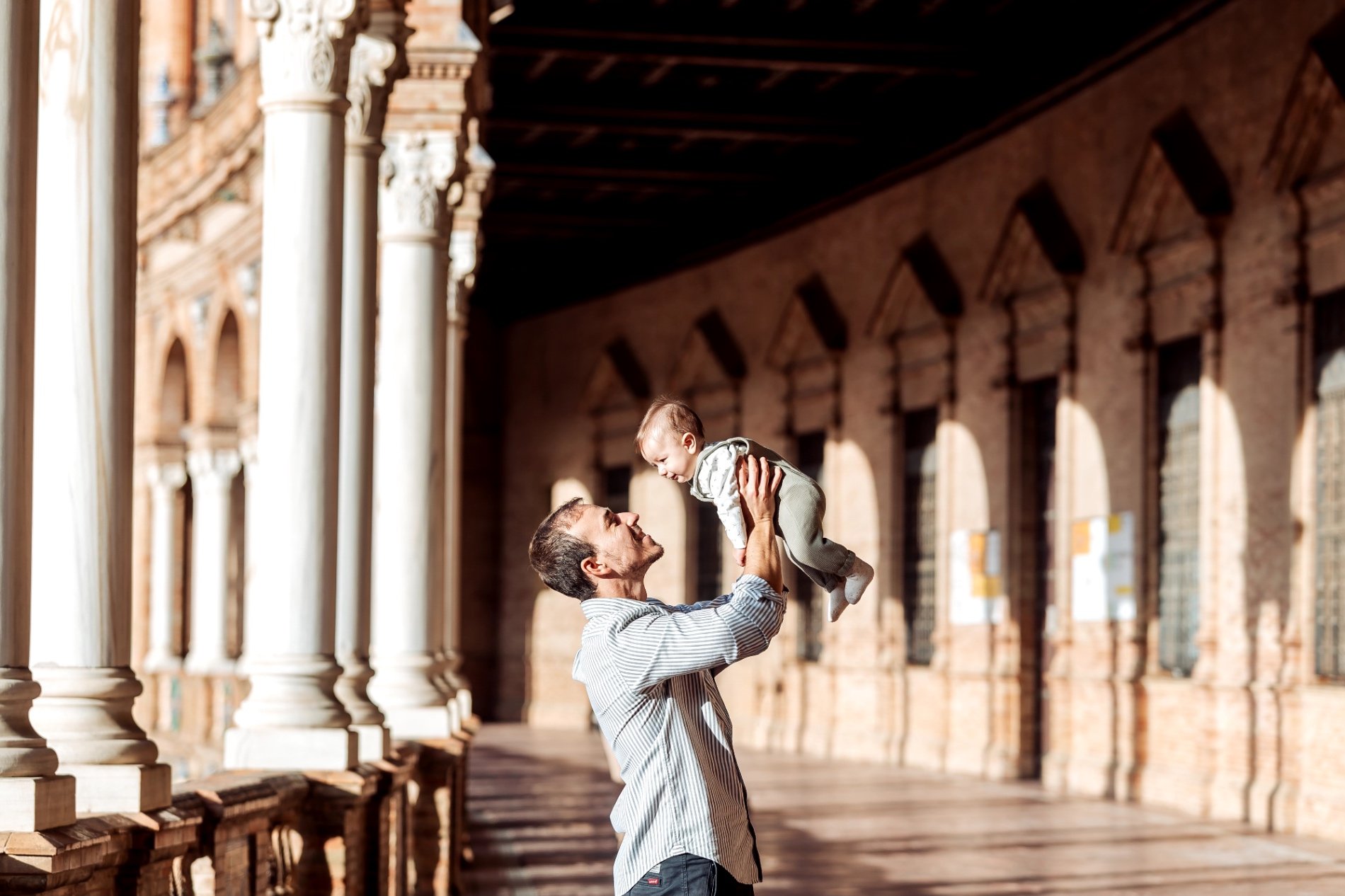
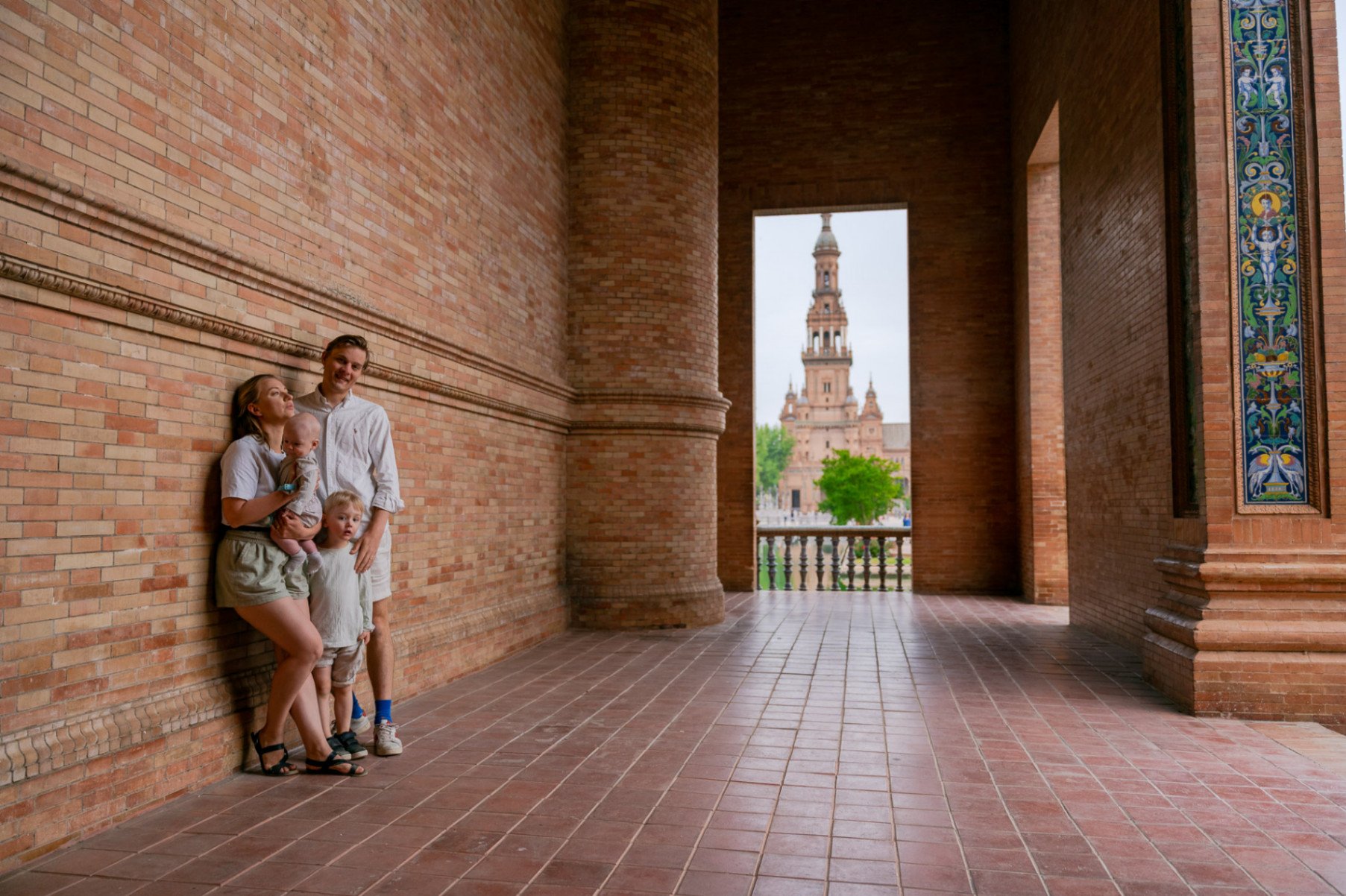
The Plaza de España is the picture everyone comes for: a half-circle of brick and tile with forty-eight alcoves, one for each Spanish province, a canal with rowing boats, and bridges to stand on. It is enormous, which means children can run without being told not to. Go early — in autumn that means shortly after eight — or share it with several hundred people.
Parque de María Luisa is next door and is the better location for the actual hour: shade all through it, ponds, the Glorieta de Bécquer under its enormous ficus, and the Plaza de América where the doves land on anyone holding food. Shade is the point with children; it is what lets a session run at eleven in the morning rather than only at the ends of the day.
Barrio Santa Cruz — Calle Agua, Plaza de Doña Elvira, orange trees against whitewash — is the prettiest and the hardest with a buggy: the lanes are narrow and cobbled. Triana, across the river, gives you the classic evening frame instead: the Puente de Isabel II, the Calle Betis riverfront and the Torre del Oro on the far bank.
The two weeks to avoid entirely are Semana Santa and the Feria de Abril. The city genuinely stops, the centre is impassable, and hotel prices multiply. More on the city in photographing Seville, and the Seville family page lists who covers it.
Granada: one viewpoint worth the climb
Granada's frame is the Mirador de San Nicolás in the Albaicín: the Alhambra on its ridge with the Sierra Nevada behind it, usually snow-capped from November through spring. Everyone goes at sunset and it is packed. Mid-morning it is nearly empty and the light on the Alhambra's red walls is actually better, because the sun is behind you rather than behind the building.
The catch is the climb. The Albaicín is steep and cobbled, and it is not a route for a pushchair or for grandparents with bad knees. The flat alternative runs along the river below: the Carrera del Darro and the Paseo de los Tristes, cobbled but level, with the Alhambra walls above you.
One thing to plan around: the Alhambra ticket is a visitor ticket. Professional sessions inside need separate permission from the Patronato, so the sensible plan is to photograph it from outside — which is where the better frames are anyway. See the Granada family page.
What clients say about this kind of shoot
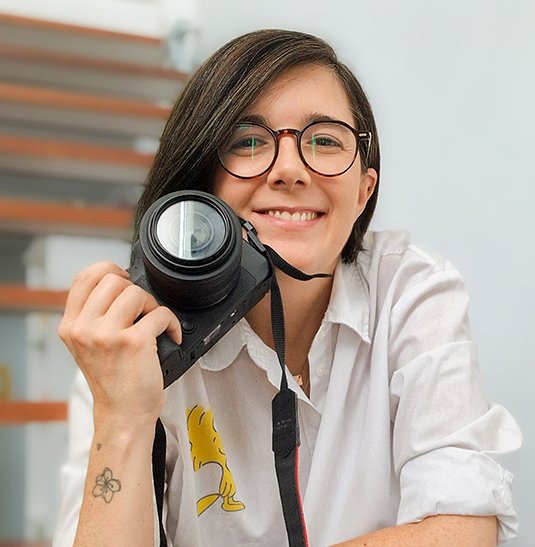
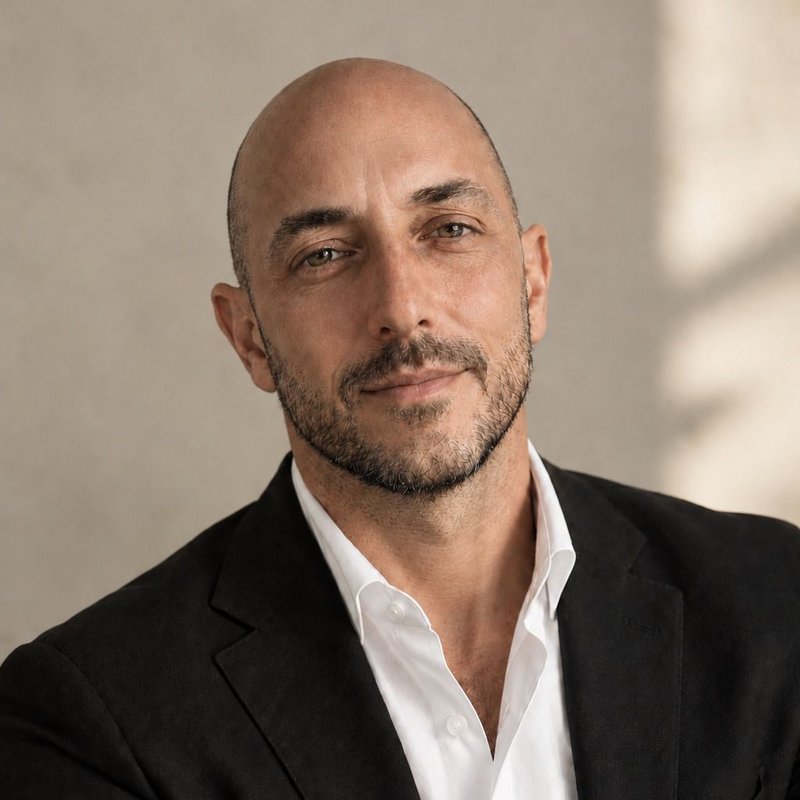
My fiancé and I are so grateful to them. We didn't know them at all, but Rafa and his team have been a key part of this adventure. They're warm and approachable, the way they treat you couldn't be better, and we really clicked from the moment we met them. They take photos that are ART.
— Elena P. on Víctor C.
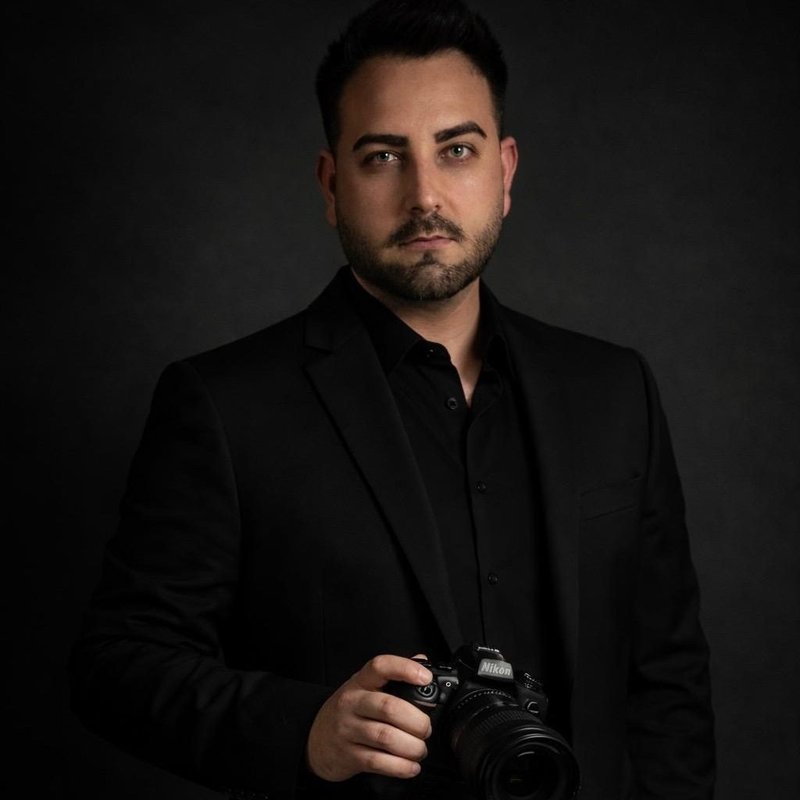
We had an amazing experience with Eduardo at Plaza de España. He was super patient with us despite us arriving a little late, and he made the most of the time we had. The photos came out absolutely beautiful! We’re so happy with the experience and would definitely recommend him to anyone visiting Seville. Thank you, Eduardo
— Thuli on Eduardo G.
A friend recommended we talk to them, as she was very happy with her wedding coverage, and right from the start we had a really good feeling about them. Doing the pre-wedding shoot with them was a brilliant decision, because Rafa is very professional and warm, gave us great advice and helped us feel confident in front of a camera, which was essential for us to feel comfortable and for the photos to turn out so well. Photos they sent us shortly afterwards and that were perfect to use for our wedding invitation :D We were in touch throughout the whole process and everything was made easy for us, which you really appreciate for such a special event. On the wedding day there were two teams (one at my partner's house and another at mine) and I was lucky enough to meet Víctor, another top-notch professional who helped my family and me a lot, and the photos turned out wonderful. We also booked video and I think it was absolutely the right call, because some moments never come again. Of course the photos turned out great, but where they surprised us was with the albums (we ordered a large one for ourselves and two extra ones to give to our families). After the hard job of choosing the photos, we added a few more pages and the result was spectacular, far better than we expected, with exceptional quality and exquisite presentation. We will definitely be counting on them for future occasions. Thank you.
— Ramon R. on Víctor C.
Eduardo was a fantastic photographer! We chose to work with him for our maternity photoshoot, and he was exceptionally professional throughout the entire process. He guided us to wonderful photo locations and gave great posing suggestions that made us feel so comfortable. The photos turned out absolutely fantastic, and his turnaround time was impressively fast. We would definitely recommend him!
— Juhi on Eduardo G.
Alvaro & team couldn't have done a better job for the wedding even if they tried. There wasn't a moment they didn't capture. He made sure to get the most casual and perfect photos possible. He didn't miss a single moment through the whole day. Myself and my family couldn't be any more delighted with Alvaro for everything he done for us. I highly highly recommend 3H visiual if you're planning a wedding or any event at all seriously he just made everything so easy and memorable there isn't enough stars available to give him!!!
— Sinead K. on Álvaro G.
Neither my wife nor I like having our photos taken, and yet they managed to make us feel like real models. Juanma, Marisi and Jorge are unbeatable: they made us feel comfortable, with an incredible pre-wedding shoot and an even better wedding. Spectacular photos, admirable ingenuity, and a professionalism that few possess. Would we recommend them? Without a doubt, they are the perfect choice and you won’t go wrong.
— Isaac on Juanma M.
Córdoba: a morning city
Córdoba is regularly the hottest city in Spain in summer and one of the gentlest in November. The frame is the Roman bridge and the Puerta del Puente with the Mezquita behind, and it works best photographed from the Torre de la Calahorra side early in the morning, before the tour groups cross.
In the Judería, the whitewash bounces light back up into faces, which makes the narrow lanes around the Calleja de las Flores usable at hours when open squares are not. If you are travelling in the first half of May, the Patios festival opens dozens of private courtyards — spectacular, and the busiest and most expensive fortnight of the Córdoba year. The Mezquita interior, like the Alhambra, is for visiting rather than shooting. See the Córdoba family page.
Making an hour work with small children
An hour booked is about forty-five usable minutes with a toddler, and a good photographer plans for that rather than fighting it.
- Book the slot after a nap, not the one before bed. In autumn that is usually late morning or the hour before sunset.
- Let the photographer plan a walking route between two or three spots close together. Children photograph well while moving and badly while standing still and being told to smile.
- Bring snacks, a full change of clothes and one familiar toy — the toy stays out of frame and comes out when attention goes.
- Choose flat ground if grandparents are coming. María Luisa in Seville, the Paseo de los Tristes in Granada and the riverbank in Córdoba all qualify; the Albaicín and Santa Cruz do not. There is more on three-generation trips in a multi-generation family photoshoot in Spain.
- Dress the group in one palette, not matching outfits. Two colours and a neutral, and nothing with a large logo.
If the trip is coastal rather than inland — a winter week somewhere mild with a beach — the Alicante family page covers the city-beach version: sand under a castle rock, a palm promenade, and mild weather all winter.
Book it
Quick Booking starts from €310, and one- to two-hour packages, the right length for a family session, start at €345 and €520. You are matched with a photographer within 24 hours of booking, and the edited gallery usually arrives about a week later. The family session format explains what is included, and the photographers covering Andalusia know which squares are empty at which hour. For a fuller version of the with-children logistics, see a family photoshoot in Spain with young children.
Frequently asked questions
When is the best time of year for a family photoshoot in Andalusia?
October to April, and within that, late October and November are the sweet spot: 22 to 27°C in the afternoon, low sun all day and empty squares. Avoid July and August, when Seville and Córdoba sit between 38 and 42°C and small children will not last twenty minutes outdoors. Also avoid Semana Santa and the Feria de Abril in Seville, when the centre is impassable and hotel prices multiply.
Which Andalusian city is easiest with a pushchair?
Seville. The centre is flat, the Plaza de España and Parque de María Luisa are both wide and paved, and the park has shade all through it. Granada's Albaicín is steep and cobbled and Córdoba's Judería is narrow, so with a buggy or with grandparents choose the level alternatives: the Carrera del Darro and Paseo de los Tristes in Granada, and the riverbank by the Roman bridge in Córdoba.
Can we photograph inside the Alhambra or the Mezquita?
Not as a booked session. Both sell visitor tickets, not shoot access, and a professional session inside needs separate permission — from the Patronato in the Alhambra's case. It is not a limitation worth mourning: the best frames of both are from outside anyway, the Alhambra from the Mirador de San Nicolás and the Mezquita from the Roman bridge, and neither needs a ticket.
How long should a session with a toddler be?
One hour. That is about forty-five usable minutes once you allow for arriving, warming up and the inevitable interruption, and stretching it to two rarely produces better pictures with a small child. Book the slot after a nap rather than before bed, keep the locations close enough to walk between, and bring snacks and a change of clothes.
Want professional photos in Seville?
Browse portfolios, compare packages, and book a verified local photographer in minutes.