Photographing Madrid: Debod, Retiro and the Old Centre
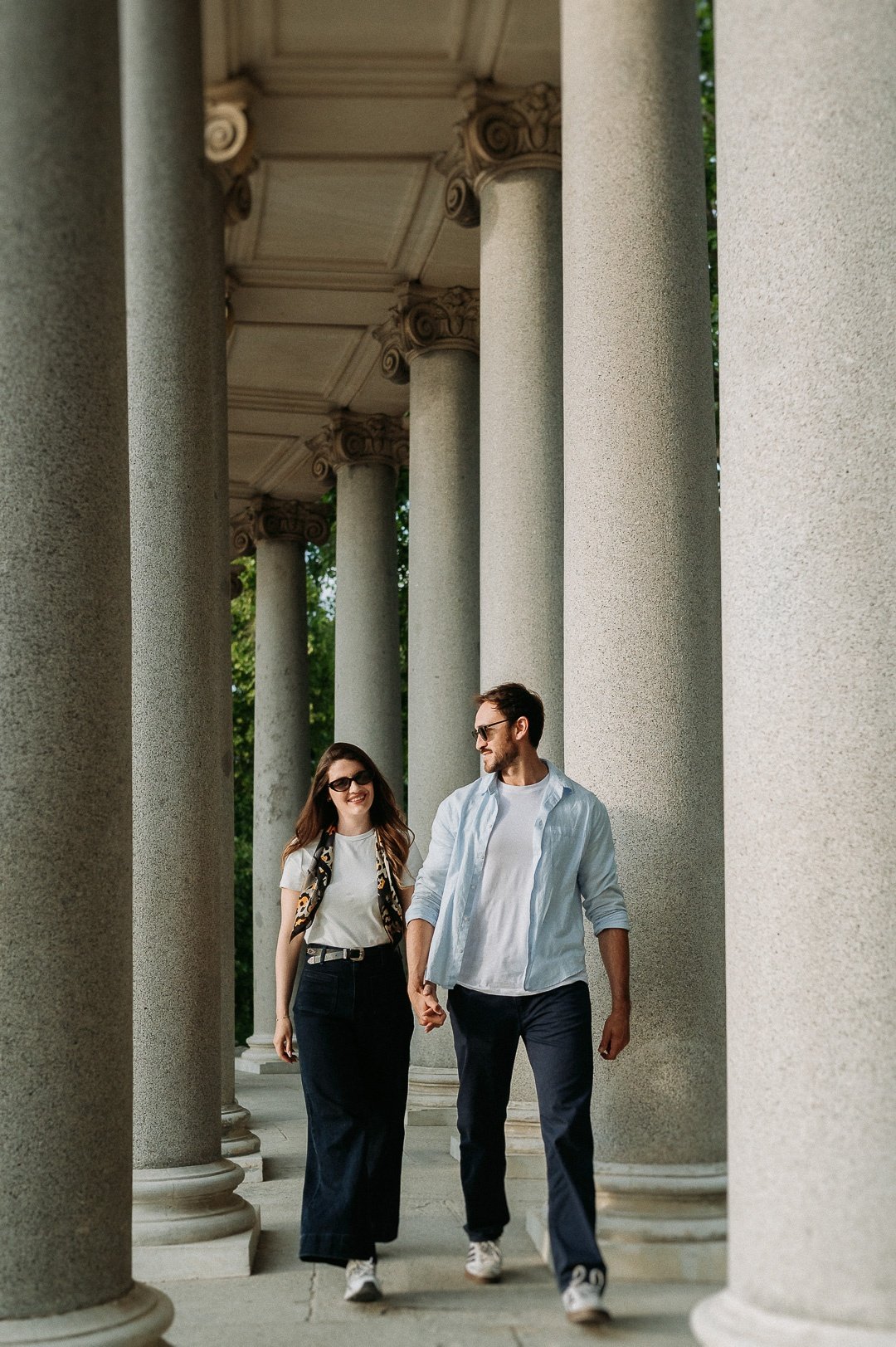
Madrid is not the obvious Spanish city for photographs, and that is exactly why it works. It is not a postcard the way Seville or Granada are, so the frames feel less borrowed — and the three locations that matter most are within a short walk of each other.
5 photo spots in Madrid — click a pin to open the full guide
Real shots from Madrid
Templo de Debod — the sunset location, and only that
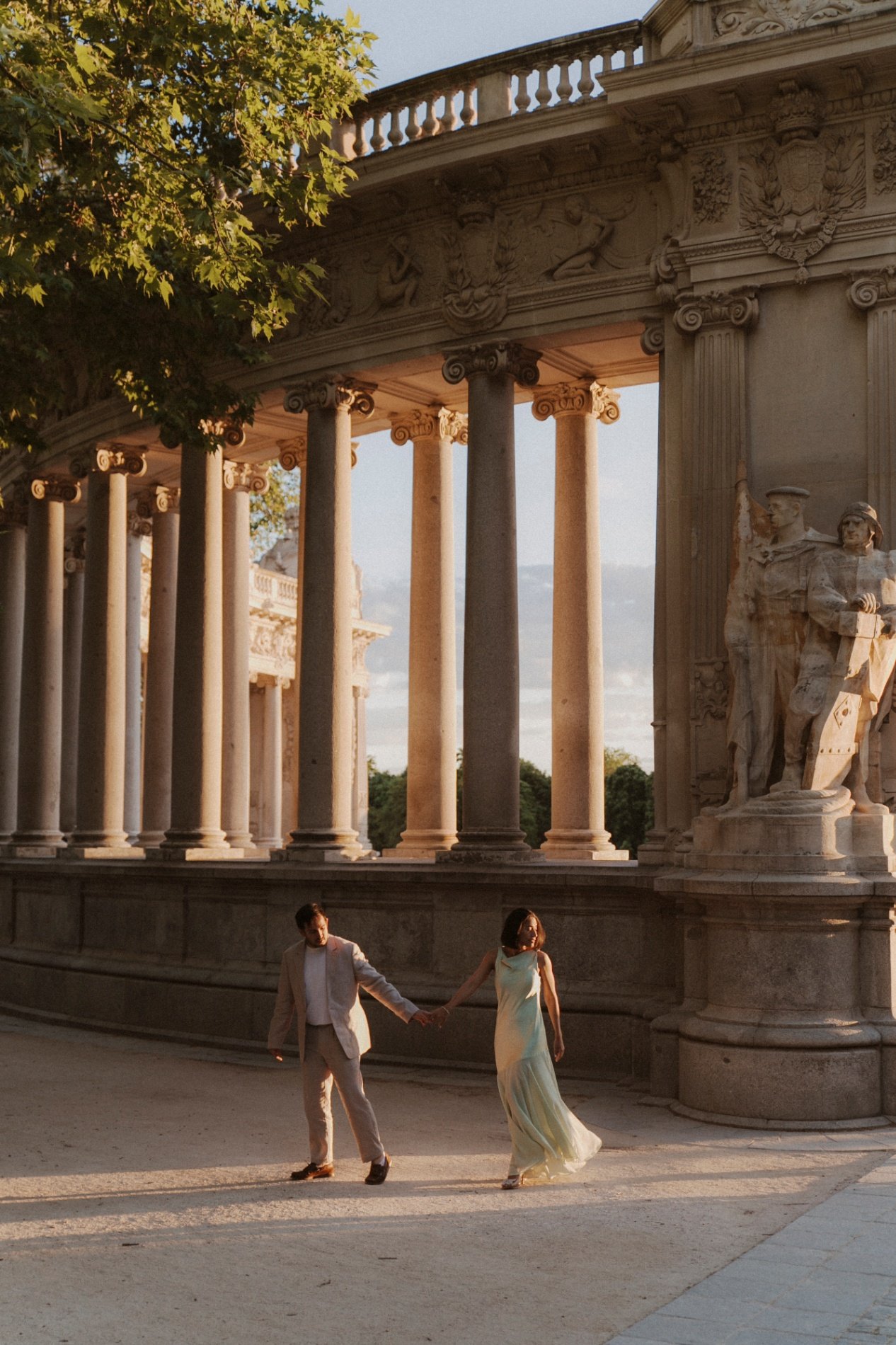
A genuine Egyptian temple, over two thousand years old, given to Spain by Egypt in 1968 and rebuilt stone by stone on a rise west of the centre. It sits behind shallow reflecting pools with the sun going down behind it over the Casa de Campo.
Two things make it work and one makes it hard.
It works because the temple faces the sunset directly — you get the silhouette, the colour and the reflection in one frame — and because the pools double whatever the sky is doing.
It is hard because everyone in Madrid knows this. On a clear evening the wall along the pools is three deep. The answer is either to arrive well before the light is good and hold your position, or to shoot from further back and use the crowd as foreground rather than pretending it is not there.
More on the spot: Templo de Debod at sunset.
Retiro and the Crystal Palace — a morning and midday location
The Palacio de Cristal is a glass and iron pavilion in the middle of the park, built for an exhibition in 1887 and now empty except for whatever art installation is inside. Its value to a photographer is simple: it is a building made of light. When the sun is high enough to come through the roof, the interior fills with soft, even, directionless light — the opposite of what the rest of the city offers at midday.
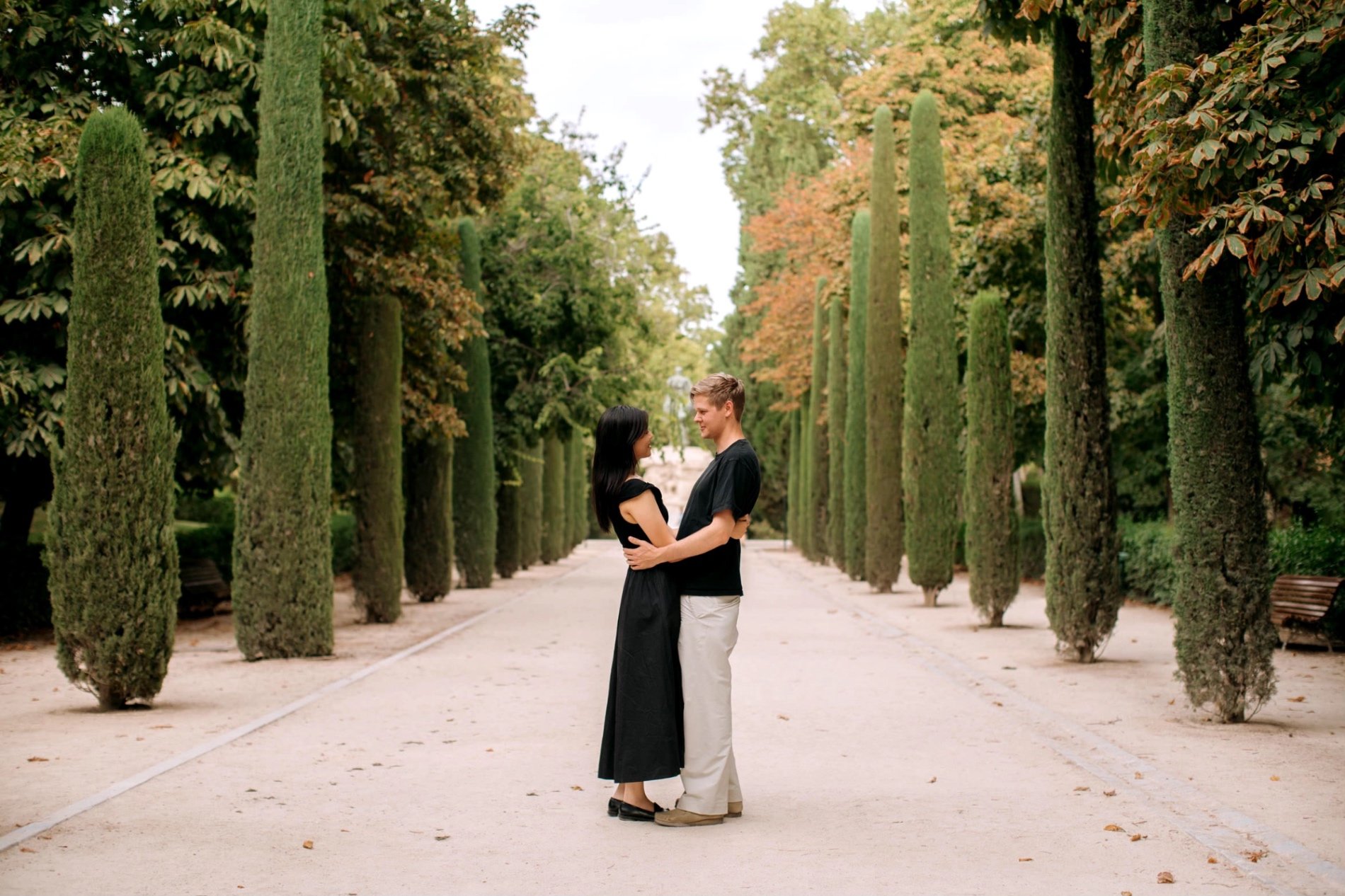
That makes Retiro the answer to the question every Madrid session runs into: what do we do between eleven and five. The rest of the park gives you tree-lined avenues, the rowing lake and a lot of shade.
More on the spot: the Crystal Palace.
Plaza Mayor and La Latina — before nine, or not at all
The arcaded square and the narrow streets running south of it are the oldest-feeling part of Madrid. They are also, from mid-morning, full.
Plaza Mayor is enclosed on all four sides, so the light on the floor is soft for most of the day — the problem is people, not sun. First thing in the morning the square is nearly empty and the arcades are doing something lovely with the low light coming in sideways.
La Latina below it is a warren of narrow streets — Cava Baja, the market at San Miguel — that stay in shade and work later into the day.
More on the spot: Plaza Mayor and the lanes of La Latina.
What clients say about this kind of shoot
We traveled to Madrid to celebrate our anniversary and decided to book a photo session with Eli after seeing her couples photography. We immediately fell in love with her style, the way she captures colors, and the beautiful locations she chooses for her sessions. The whole experience exceeded our expectations. From the very beginning, she recommended the best locations, the perfect time of day for the best light, and even suggested outfit colors that would complement each other and the surroundings. We're not naturally comfortable in front of the camera and had no idea how to pose, but Eli guided us every step of the way. Her warm, friendly, and easygoing personality made us feel completely at ease, and before long the session felt natural, relaxed, and genuinely fun. We couldn't be happier with our anniversary photos and the entire experience. We wholeheartedly recommend Eli to anyone looking for an anniversary photoshoot in Madrid. She's not only an incredibly talented photographer but also a genuinely wonderful person.
— Orange Delivery on Eli M.
I have recently used Petra for my Madrid Proposal and would highly recommend her! From helping to pick the perfect location, organising a violinist and the amazing photography that we will get to keep forever, thank you so much, you helped to make it a day to remember!
— Thomas Wilson-Bolton on Petra M.
Petra was great! She discreetly photographed and videoed my proposal and then photographed us in multiple locations. She was very helpful in posing us for photos while keeping everything very natural and fun.
— Jett Allen on Petra M.
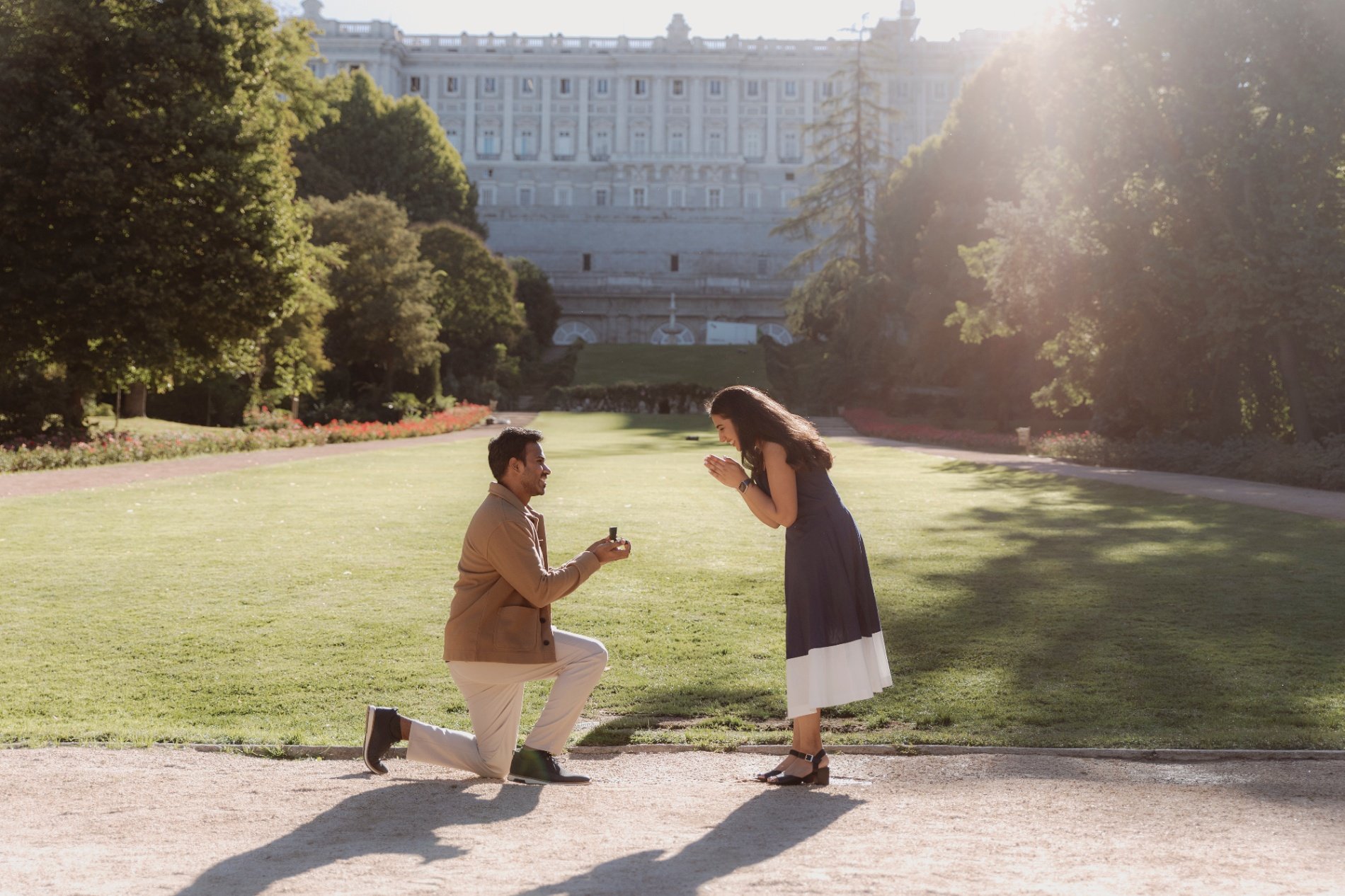
Petra Majerova was a wonderful choice for our wedding. She accompanied us for two sessions: on our wedding day and, a few weeks later, in the gardens of the Royal Palace of Madrid. On both occasions, she made us feel comfortable and natural, perfectly capturing our connection, our emotions, and all those little moments that make photographs truly special. Her photography is elegant, sensitive, and full of personality. The result exceeded our expectations: we not only have beautiful images, but also a memory that tells our story. We wholeheartedly recommend Petra to any couple looking for a top-notch wedding photographer in Madrid.
— Miguel Coca on Petra M.
Petra photographed my engagement and did a great job! She had many ideas for photos and created a comfortable atmosphere. We had so much fun doing a photo shoot with her! Before the fact, she was a great communicator and helped to ensure everything went smoothly. Would recommend!
— Lucas Mendoza on Petra M.
Petra was amazing from start to finish! Even from the beginning process I had no idea of what to except coming from Canada to Spain and she handled all of that perfectly showing me examples and helping me with the process of how it all goes down. Then came time for the surprise shoot for my proposal she handled it perfectly and captured the most amazing moment in our lives perfectly. The photos turned out so beautiful and her skills are truly amazing!
— Petrit Jaha on Petra M.
The ones that are worth twenty minutes
Gran Vía — the closest Madrid gets to a canyon of a street, with early-twentieth-century facades. Only viable very early; by ten it is one of the busiest streets in Spain.
Plaza de Oriente and the Royal Palace — scale and formality, a useful contrast if the rest of your session is in old lanes.
Malasaña and Chueca — colour, murals, café frontage. Good with people who would rather not stand in front of a monument.
What Madrid does that the coast does not
Two things worth knowing.
It sits at around 650 metres, and the air is dry. That gives the light a hardness you do not get on the coast — good for architecture and contrast, less forgiving for portraits in the middle of the day.
And it has real winters. December and January are cold and often clear, and the sun stays low all day, which means usable directional light from mid-afternoon. Madrid in winter is one of the better-value photography months in Spain: no heat, no crowds, and the light does half the work.
Summer is the opposite. July and August regularly pass 35°C and the city empties in August as everyone leaves for the coast. If you are here then, the day is a sunrise session and an evening session with a long gap in the middle.
A route that works
- Early morning — Plaza Mayor and La Latina, before the square fills
- Late morning — Retiro, the avenues and the lake
- Midday — the Crystal Palace, when the light comes through the glass
- Late afternoon — Malasaña, or Plaza de Oriente
- Sunset — Templo de Debod
That is a full day and more than most people book. If you have two hours, take the first item and the last — they are the two Madrid does better than anywhere else.
If you would rather not plan it, the photographers covering Madrid build this route weekly and will fit it to your date and the sunset time.
Frequently asked questions
What time should I photograph the Templo de Debod?
Sunset, and only sunset — the temple faces the setting sun directly, so you get silhouette, colour and the reflection in the pools in one frame. Everyone in Madrid knows this, and on a clear evening the wall along the pools is three deep: either arrive well before the light is good and hold your position, or shoot from further back and use the crowd as foreground rather than pretending it is not there.
Where can you shoot in Madrid in the middle of the day?
The Crystal Palace in the Retiro. When the sun is high enough to come through the glass roof, the interior fills with soft, even, directionless light — the opposite of what the rest of the city offers at midday — and the park around it gives tree-lined avenues, the rowing lake and a lot of shade. La Latina's narrow streets below the Plaza Mayor also stay in shade and work later into the day.
If I only have two hours in Madrid, which locations should I choose?
Plaza Mayor and La Latina first thing in the morning, before the square fills, and the Templo de Debod at sunset — they are the two things Madrid does better than anywhere else. The full route in between (Retiro late morning, the Crystal Palace at midday, Malasaña or Plaza de Oriente in the late afternoon) is a whole day and more than most people book.
Want professional photos in Madrid?
Browse portfolios, compare packages, and book a verified local photographer in minutes.