Fashion and Editorial Photoshoots in Spain: What You Can Actually Book
A fashion photographer booked in Madrid or Barcelona for a couple of hours is not a studio production with a crew — it is one photographer, natural light and a planned route through the city. What that buys is the thing most people are actually searching for: a set of images that read like a magazine page rather than a holiday album, shot in one or two hours for a fixed price. Here is what fits in that time, where it works in each city, and what you have to bring yourself.
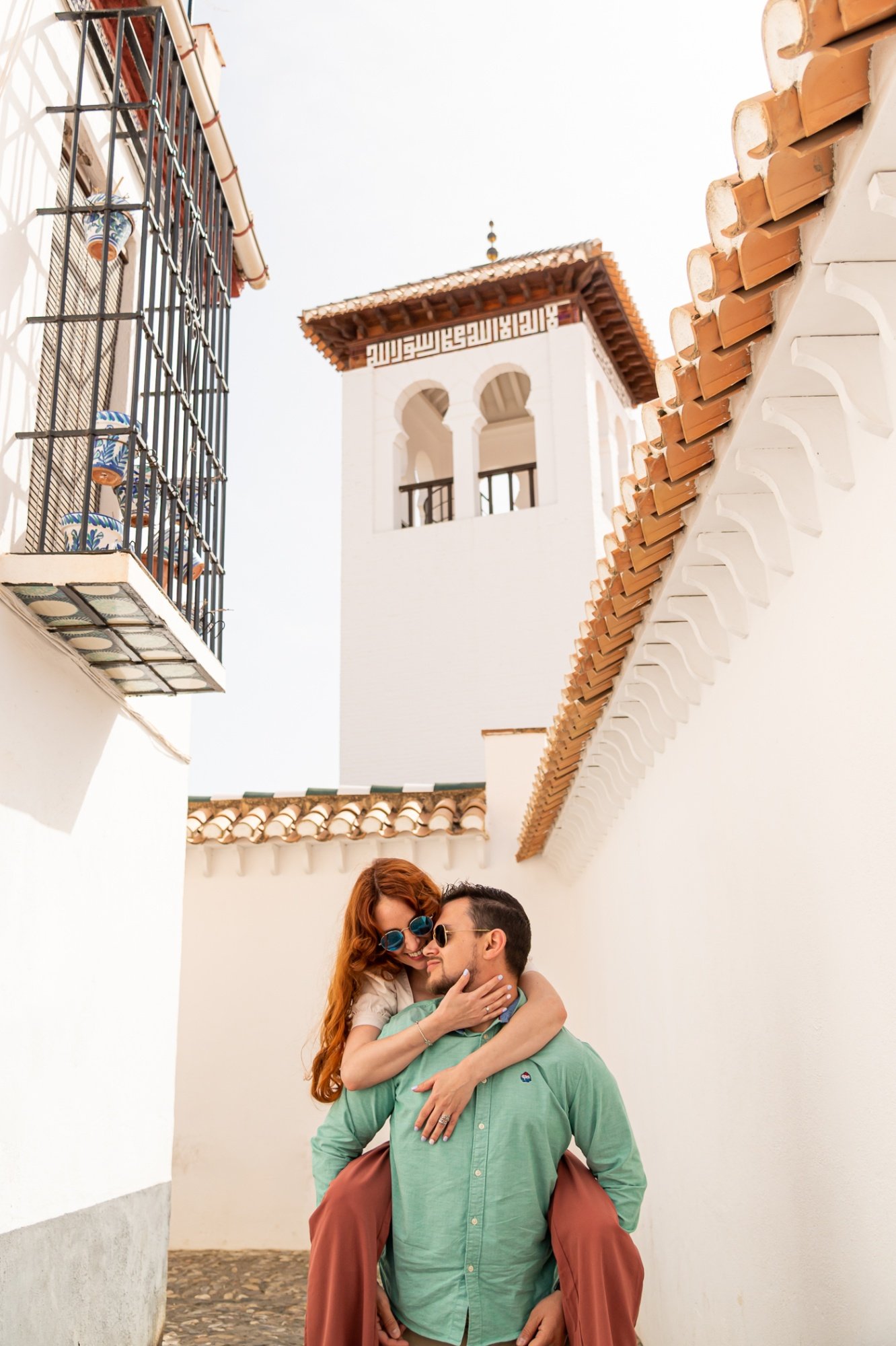
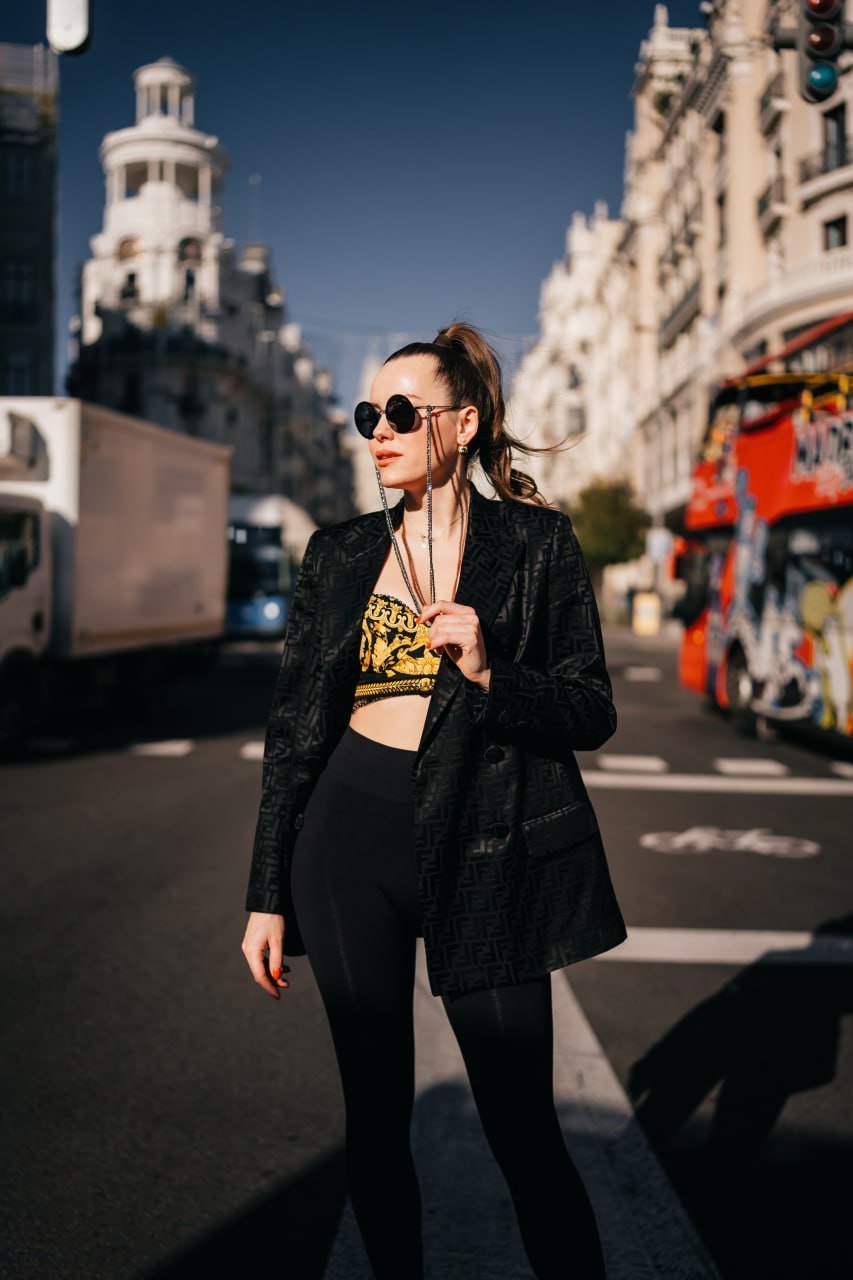
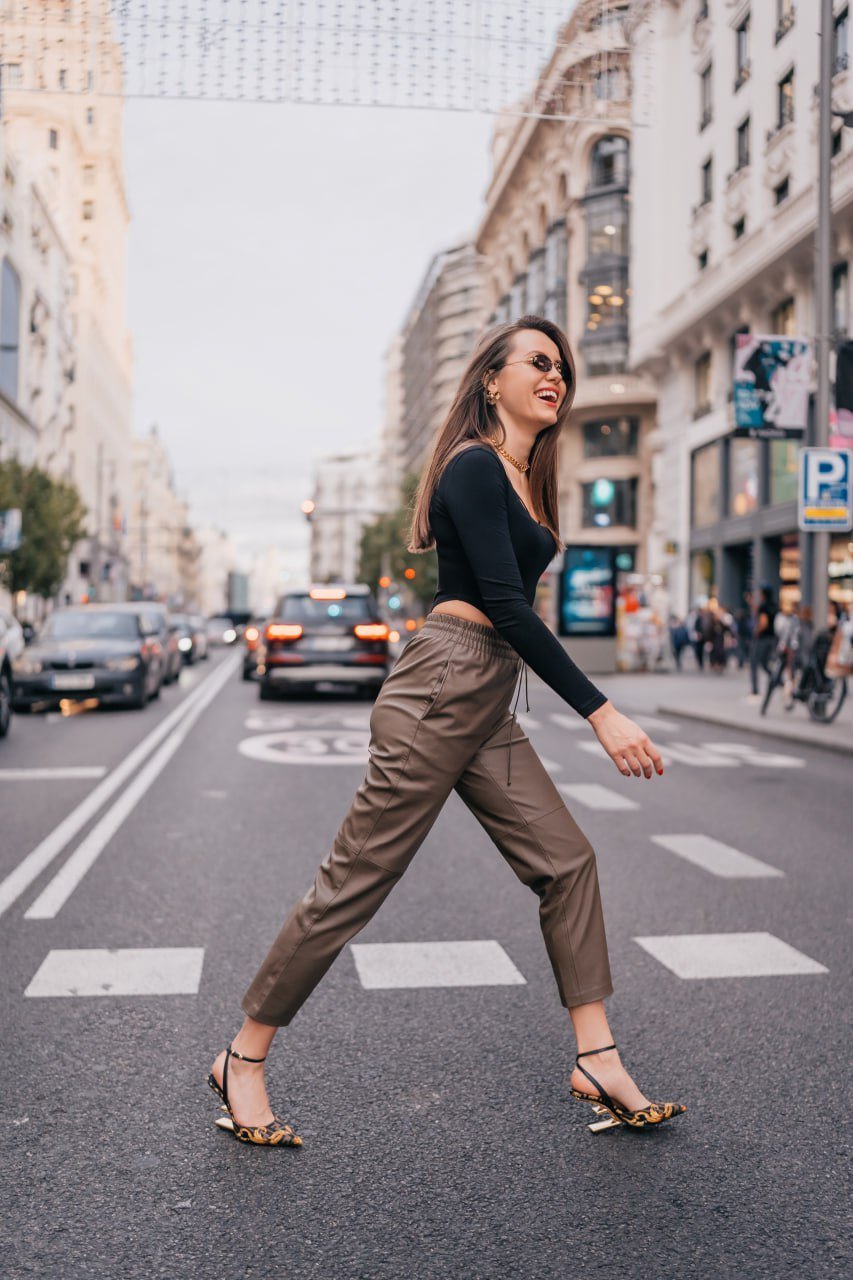
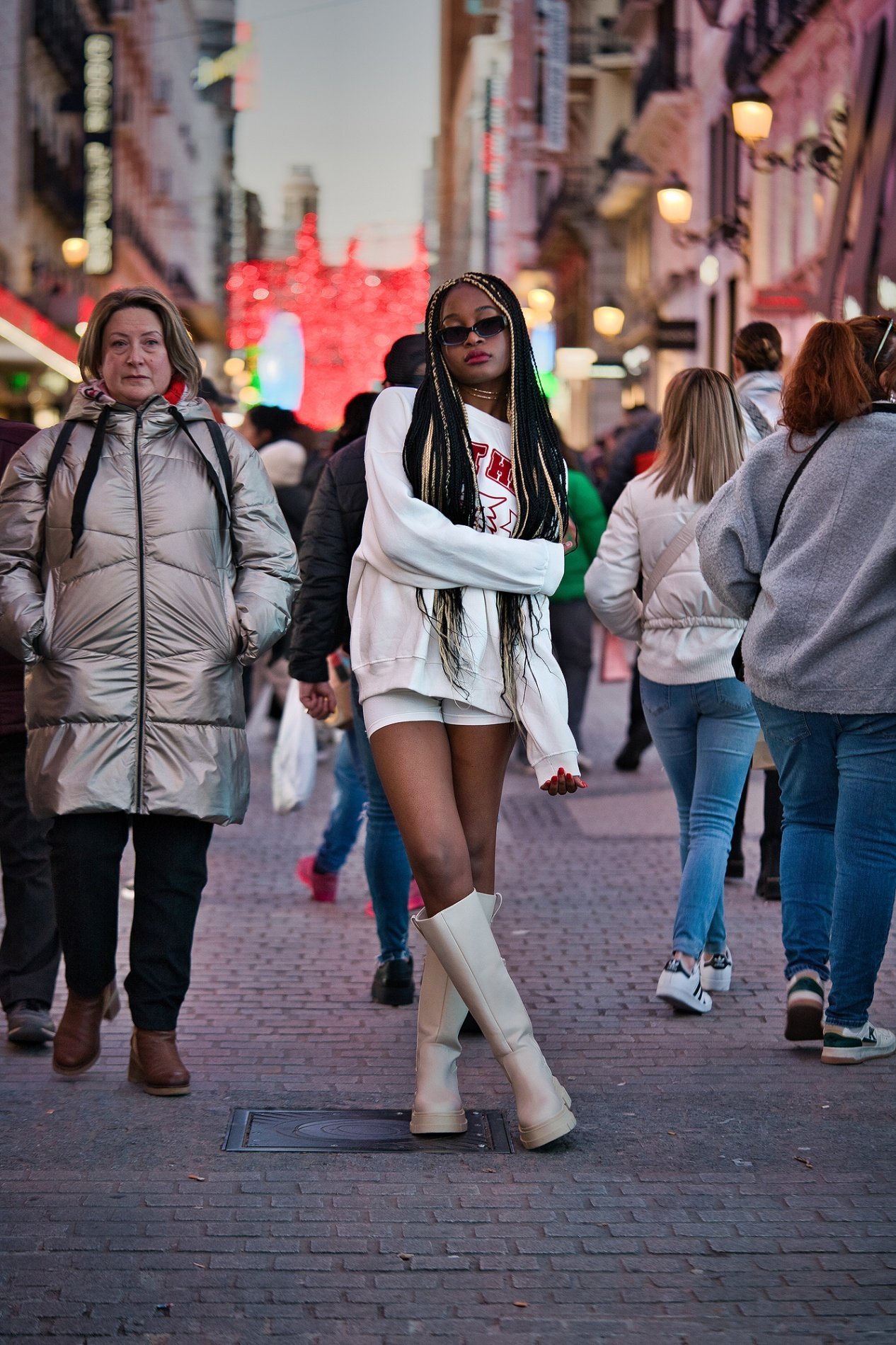
Real shots from Madrid
What "editorial" means when nobody brings a lighting truck
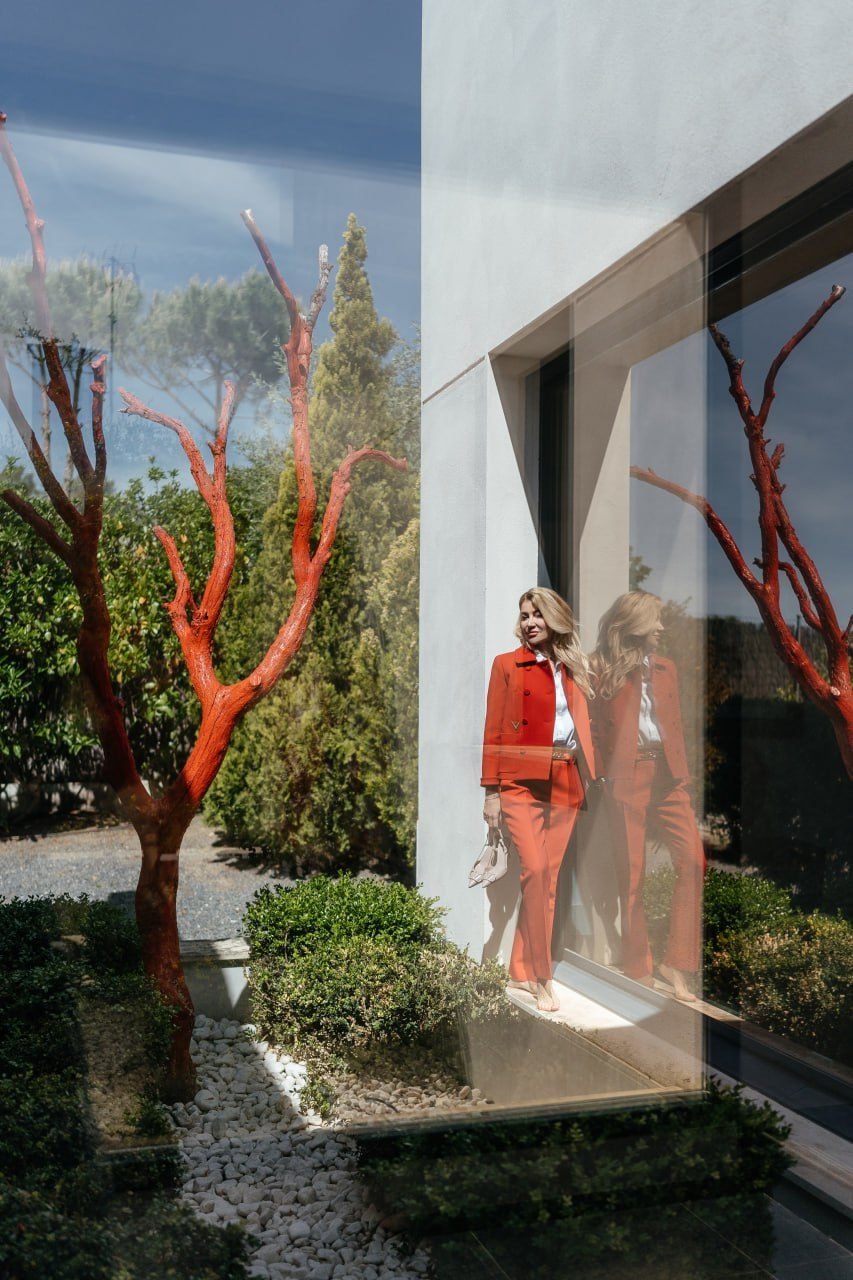
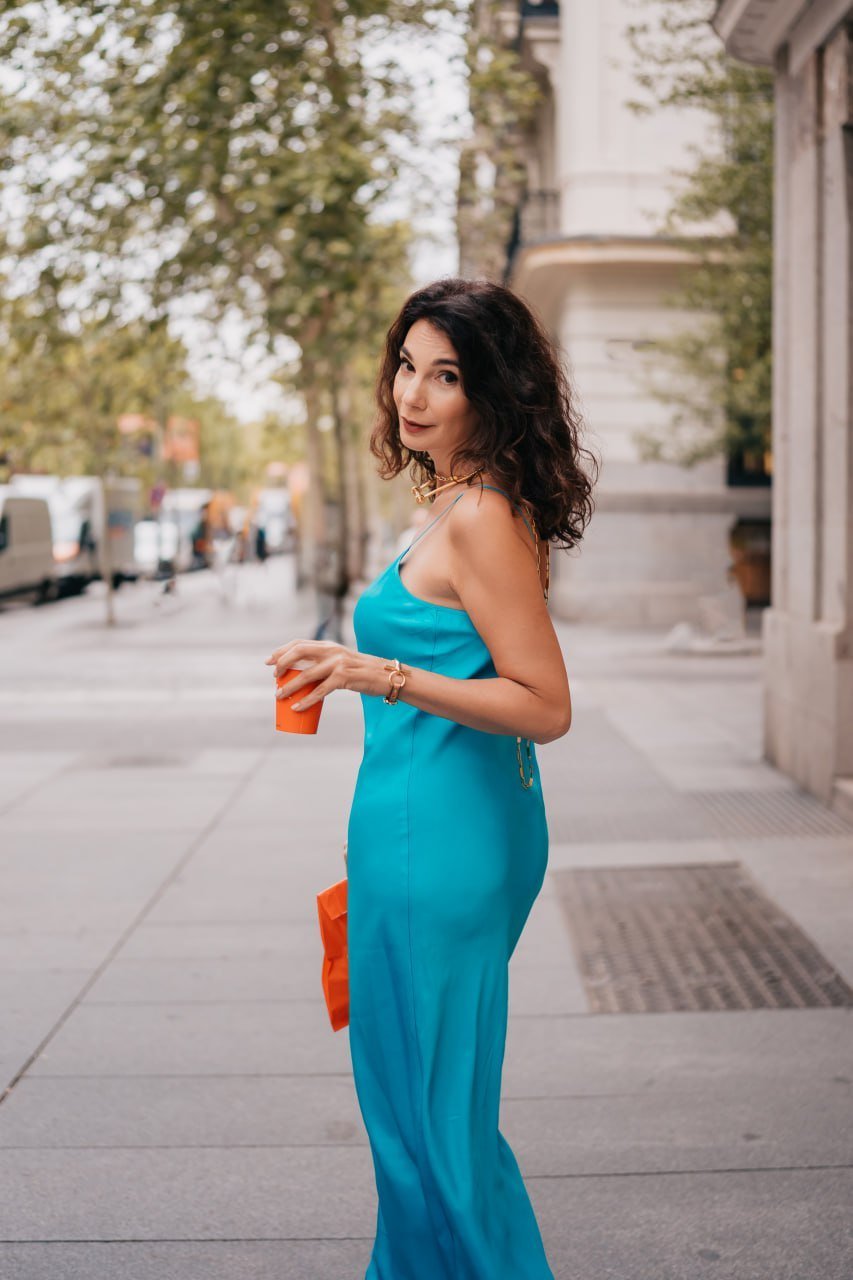
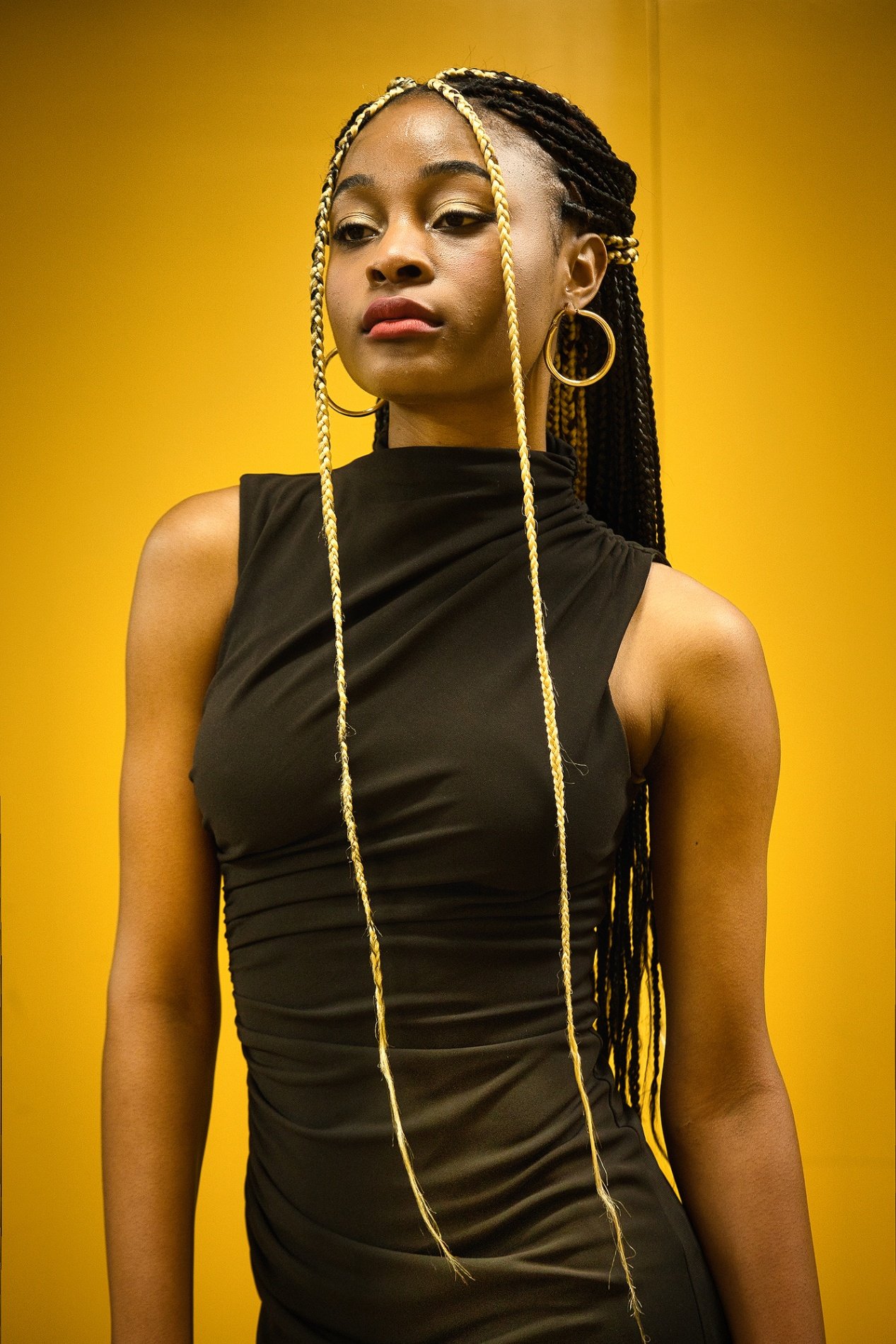
An editorial-style session on location is a portrait session with a different set of decisions. The photographer works for the frame rather than for your smile: more full-length, more negative space, more architecture, fewer eyes-to-camera. You will be asked to walk, to stand still in odd places, to look away.
What is not included, and nobody should pretend otherwise. There is no stylist, no hair and makeup, no assistant holding a scrim, no van of clothes. If you want makeup, book it separately for the hour before. If you want a specific garment, you carry it.
What you do get is direction, a route where the light and the backgrounds have been thought about, and consistency — frames that belong to one story rather than forty unrelated snaps. That is what a fashion session is for, whether the end use is a model portfolio, a brand's website, or simply photographs of yourself that do not look like everyone else's.
If you want the clean white-or-grey background version instead — the one agencies ask for as digitals, or a clean commercial portrait — that is a different booking: a studio portrait in a rented space, priced and planned separately.
Madrid: the city that already looks like a set
Madrid is the stronger of the two for hard-edged editorial work: the centre is built of stone and the light bounces.
Barrio de Salamanca is the obvious one and it works best before the shops open. Calle Serrano and Calle Jorge Juan have clean façades, awnings and glass, and the little pedestrian passage of Callejón de Puigcerdà off Jorge Juan gives you a tunnel of shopfronts with almost nobody in it before ten in the morning. After eleven it is a shopping street and the frames fill with people.
Gran Vía and Callao are the night half of the same city. The Edificio Carrión and its Schweppes sign light up at dusk, and the useful window is roughly thirty minutes after sunset — in late September that is around 20:15, in mid-October nearer 19:35, and after the clock change at the end of October it comes forward to about 18:45. Earlier and the signs do not read; later and the sky goes black behind them.
Matadero Madrid, the old slaughterhouse at Legazpi, is the industrial option: brick sheds, huge doorways, deep shade. Because so much of it is covered it is one of very few places in Madrid that photographs well at one in the afternoon, which matters in a city where summer midday is unusable.
Conde Duque gives a baroque military doorway and long brick walls; the Palacio de Cristal in the Retiro is glass and reflection, and photographs better on a grey day than a bright one. For sunset silhouettes there is the Templo de Debod — the single most crowded viewpoint in the city at that hour.
More on the city, hour by hour, on the Madrid location page.
Barcelona: texture, modernisme and a beach at the end of the metro
Barcelona has more surface variety in a short walk than anywhere else in Spain.
Passeig de Gràcia is façades — Casa Batlló, La Pedrera — plus the thing photographers actually use, which is the pavement: the hexagonal Panot flower tile that covers half the district and gives you a graphic floor for full-length frames.
El Born, around Carrer de Montcada and the Passeig del Born, is narrow, stone and shaded all day, so it works in hours the coast does not. Poblenou is the opposite: wide, low, brick, with the old factory walls around Can Framis and a long straight rambla that gives clean lines behind a walking shot.
Barceloneta's wooden boardwalk faces roughly east, so it is a morning location, not an evening one. And the Bunkers del Carmel put the whole city behind you; evening access there is managed, so ask the photographer which slot is realistic.
The Barcelona solo-portrait page lists the photographers who cover these.
When the background should not be a city
Two places worth the extra travel if the look you want is resort or landscape rather than street.
Formentera is sand, turquoise water and light, and nothing else in the frame — the dunes behind Ses Illetes and the long sandbars off Migjorn. It is a thirty-minute ferry from Ibiza and realistically a late-spring-to-September location; in late September the sun goes down around 19:55 and the beaches are already quiet. See Formentera.
Ronda is the countryside version: vineyard terraces at seven hundred metres, a gorge, and a long golden hour that arrives late because of the altitude. Good for anything with a coat, boots or a long dress in it. See Ronda.
What clients say about this kind of shoot
The work Martino did was magnificent! We LOVED the photos he took of us at Lake Braies❤️ 🤩!. He was also very kind and attentive throughout the whole process, from the first contact to the day of the proposal, always in touch, taking care of every detail of the light so that everything turned out perfect. It was a wonderful experience! His services are highly recommended. Thank you Martino 🫰🏽!
— Rogelio R. on Martino B.
Met coincidentally at Lake Braise, and offered to take some shots for my partner and I! Photos were amazing!!
— Timothee on Martino B.
Martino is a great professional and a great person. Without a doubt, his attention to detail made our wedding memories stay etched in our minds forever. I recommend him 100%.
— Marisol R. on Martino B.
We met Martino at my brother's wedding and, when it was my turn, I had no doubt at all: it had to be him. My husband doesn't like anything artificial or forced poses at all, and with Martino we knew from the very first moment that we'd be comfortable. And so we were. He did an excellent job capturing the happiest day of my life, staying with me from early in the morning, from the very first bridal preparations. He has a special gift for going unnoticed and capturing the magic of every moment. But if there's one thing I'll always be infinitely grateful to him for, it's capturing such special and genuine moments with my father, who walked me down the aisle and is no longer with us. Those photos are worth their weight in gold to me today; they're a treasure nothing can erase. Martino's work goes far beyond the aesthetic: it has soul. I would recommend him a thousand times over. Thank you for everything, Martino!
— Amparo C. on Martino B.
Thank you so much for the photos of the little circus school's show! They're really good!
— Espai V. on Martino B.
The photos of my daughters' circus show are amazing. Thank you so much.
— SSH on Martino B.
Looks, clothes and how the hour actually goes
Three looks in an hour, four or five in two. Changing is real time — finding somewhere to change, walking to the next spot, resetting. Anyone promising eight is either shooting in one room or not changing much.
- Iron or steam everything the night before. Fabric creases photograph far worse than they look in a mirror.
- One palette per look. Two colours and a neutral. Busy prints fight the architecture, and Madrid and Barcelona are both busy backgrounds already.
- Two pairs of shoes, one of them walkable. A city session covers two to four kilometres.
- One strong accessory per look, not five. A coat, a bag, sunglasses — a pile of objects does not read.
- Say what the pictures are for at the point of booking. Portfolio digitals, a website hero image and a magazine-style set are three different shoots, and the photographer will plan a different route for each.
Permits, interiors and who owns the pictures
A photographer working handheld with natural light on a public street is treated as a private session almost everywhere in Spain. The moment there is a tripod, a light stand or a visible crew, both Madrid and Barcelona want a permit for commercial work — which is one more reason the natural-light version is what gets booked.
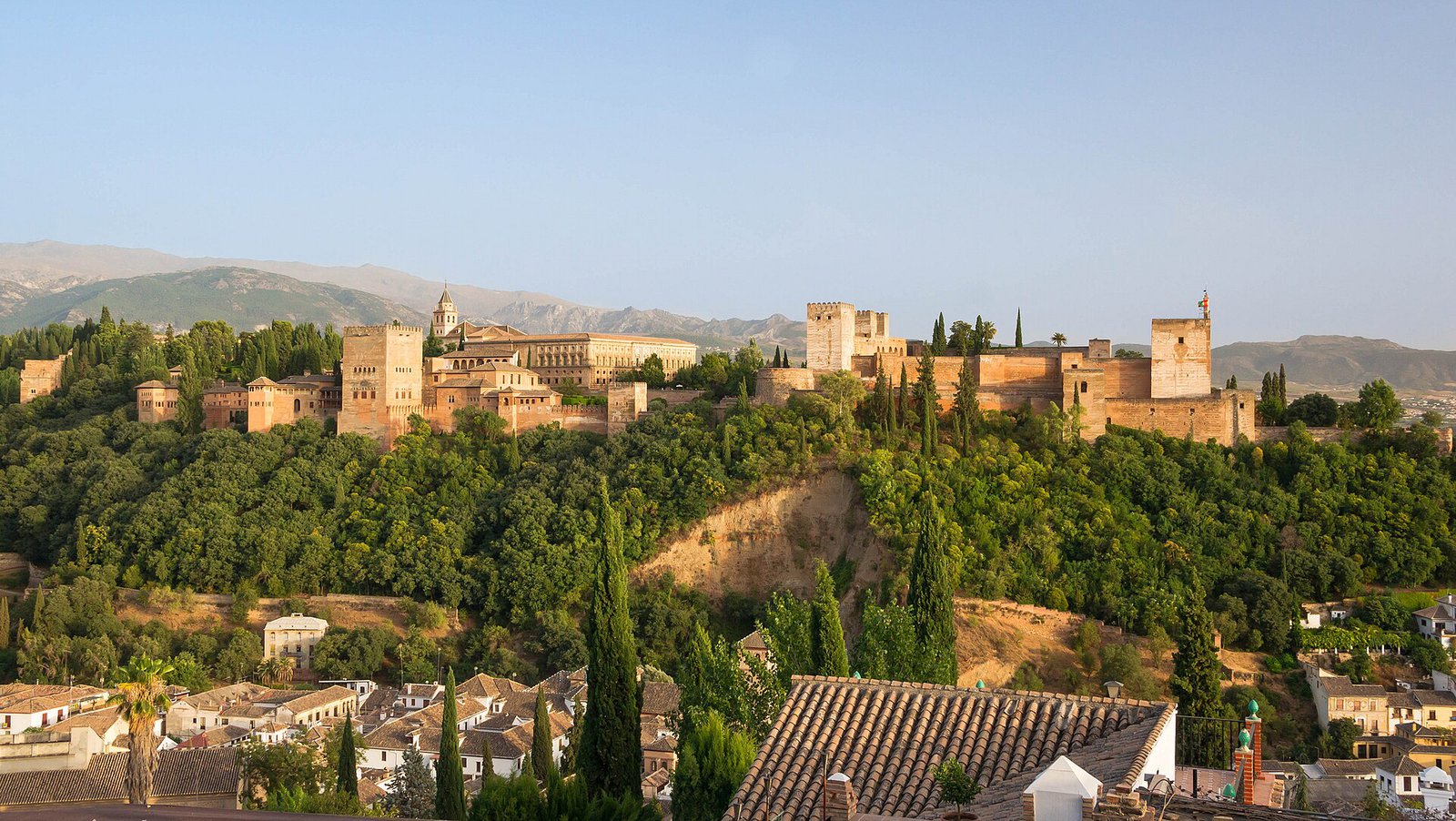
Interiors are the common disappointment. Casa Batlló, La Pedrera, the Alhambra and the Mezquita sell visitor tickets, not shoot access; professional sessions inside need separate permission. Photograph them from outside, which is where the better frames are anyway.
On usage: if the images are for a brand, agree in writing before the shoot what you may use them for and for how long. The photographers who take commercial work expect the question.
Book it
Quick Booking starts from €310, and one- to two-hour packages, the right length for two to four looks, start at €345 and €520. You are matched with a photographer within 24 hours of booking, and the edited gallery usually lands about a week after the session. If you are weighing the length or the budget, the pieces on what moves the price of a photoshoot in Spain and on solo portrait sessions cover the rest.
Frequently asked questions
Is a fashion photoshoot in Spain the same as a model portfolio shoot?
Not quite. A portfolio, or book, usually needs a specific mix: clean digitals against a plain background, plus editorial-style location frames. The location half is exactly what a one-to-two-hour city session delivers, and it delivers it well. The plain-background half is a studio booking with different lighting and a different price. Tell the photographer which you need at the point of booking and they will plan the route — or the room — accordingly.
How many outfits can I change into during a session?
Three in an hour, four or five in two hours. Changing costs real time: finding somewhere to do it, walking to the next location, resetting the light. In Madrid's Barrio de Salamanca or Barcelona's El Born the spots are close enough together that you keep most of the hour; a session that crosses a city loses twenty minutes to transit and one look with it.
Do I need a permit to shoot on the street in Madrid or Barcelona?
For a normal session — one photographer, a camera, natural light — no. Permits become the issue when there is a tripod, lighting equipment or a visible crew on public land, and both cities treat that as commercial filming. Building interiors are separate again: a visitor ticket to Casa Batlló or the Alhambra does not include the right to shoot professionally inside.
What time of day works best for editorial photos in Spanish cities?
The first hour after sunrise and the last ninety minutes before sunset, with one useful exception: covered or narrow locations such as Matadero Madrid and El Born hold up in the middle of the day because they are permanently shaded. For neon and shopfront frames on Gran Vía, aim for roughly half an hour after sunset — about 20:15 in late September, 18:45 once the clocks change at the end of October.
Want professional photos in Madrid?
Browse portfolios, compare packages, and book a verified local photographer in minutes.