Booking a Photographer When You Are Travelling Alone
The most common reason people book a solo session is simple and slightly sad: they have travelled somewhere extraordinary and every photograph they have of themselves there is taken at arm's length or by a stranger who cut off the building.
It is also, quietly, the fastest-growing kind of travel photography. Here is what to know.
A solo session is not a couples session with one person missing
The shape is different. There is no second person to interact with, which removes the easiest source of natural expression — so the photographer has to work harder and you have to be given more to do.
What that looks like in practice: more movement, more environment, more shots where you are part of a place rather than centred in front of it. Walking, sitting, looking away, arriving somewhere. Fewer straight-to-camera portraits, unless that is specifically what you asked for.
Say up front which you want. "Portraits of me" and "photographs of me in this city" are two different briefs and produce two different sets.
It is less awkward than people expect, and here is why
The worry is always the same: standing alone in a public place while someone photographs you.
Two things defuse it. The first is that in a busy Spanish city nobody is looking — there are a hundred people with cameras within fifty metres. The second is that good solo locations are chosen partly for cover: narrow lanes, gardens, the shaded side of a square.
If it still worries you, say so when you book. A photographer can work with a longer lens from further away, which reads as street photography to everyone around you.
Locations that work better alone than in a group
Some places are actively better for one person:
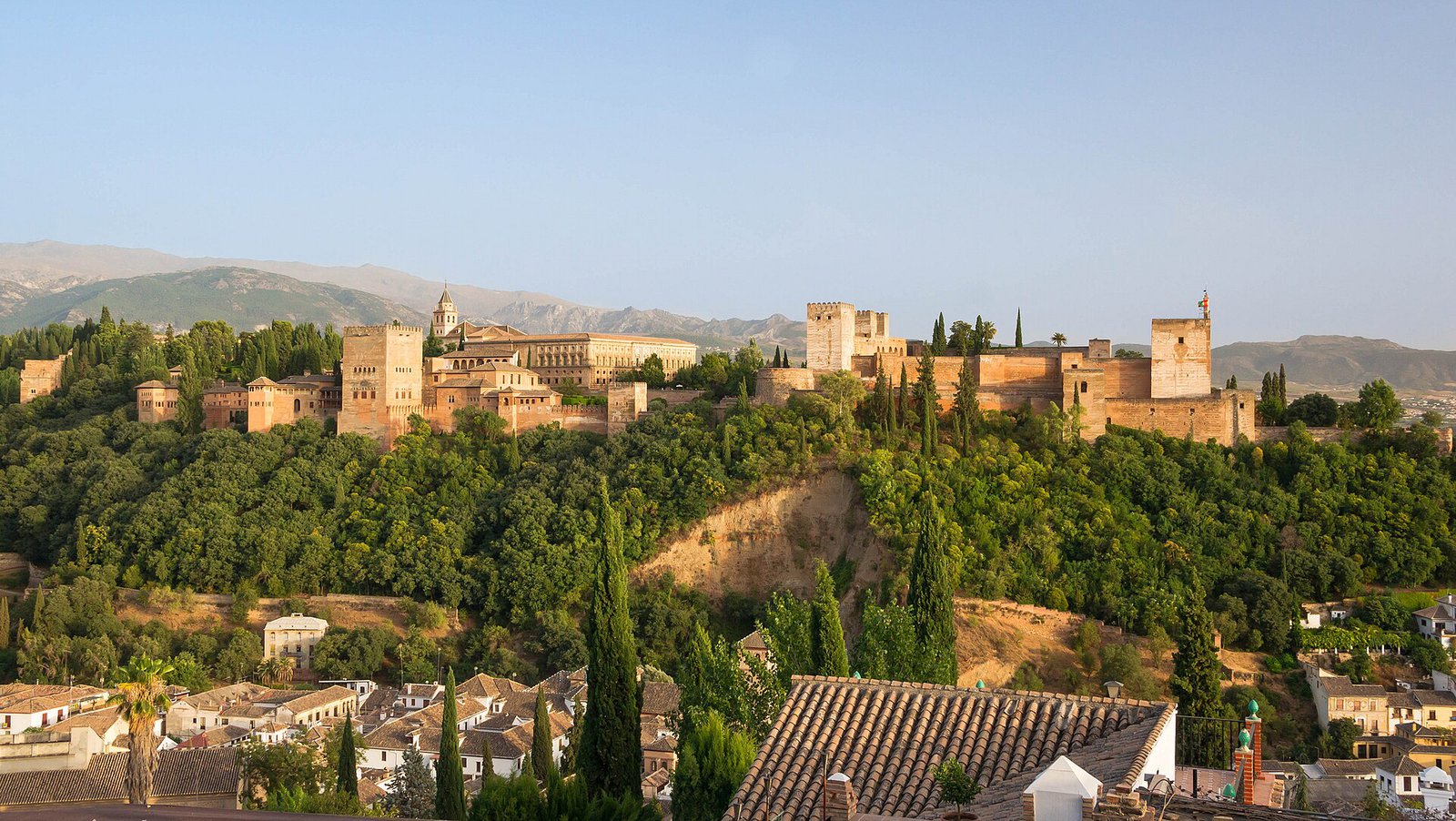
- Narrow old-town lanes. The Albaicín in Granada, Santa Cruz in Seville, Dalt Vila in Ibiza. A group blocks the lane; one person belongs in it.
- Big architecture. Valencia's City of Arts and Sciences and Seville's Plaza de España are built at a scale that makes a single figure read as deliberate rather than lost.
- Anywhere with a long line. A promenade, a bridge, a colonnade. San Sebastián's La Concha railing does this for a kilometre.
- Viewpoints at sunrise. Empty, and you are not competing with a crowd for the one clean spot.
The practical differences
It is cheaper. Fewer people is less work in the edit, and solo sessions are usually shorter. An hour is generous for one person.
It moves faster. No waiting for anyone. An hour alone covers what ninety minutes covers for a family.
Bring one change of clothes, not three. The temptation with a solo session is to treat it as a shoot. Two looks is plenty; more and you spend the light changing.
What to actually ask for
Be specific about the use. A solo session might be for:
- Memories of a trip — environment-heavy, candid, movement.
- Photographs you will actually use — a dating profile, a website, a professional headshot with a city behind it. Say so; the framing and the count change completely.
- A milestone — a birthday alone, a first trip after something, a year of something. Tell the photographer. It changes what they look for.
The third one is more common than people admit, and it is usually the reason the photographs matter afterwards.
One tip that changes the set
Do something in the photographs. Order a coffee and drink it. Buy flowers at a market and carry them. Walk into the sea up to your ankles.
Photographs of a person standing in a place are fine. Photographs of a person doing something in a place are the ones that look like a life rather than a location.
You can browse photographers by city or describe the trip to the concierge and have options come back — for a solo session, someone who knows quiet corners of your city is worth more than a portfolio you like the look of.
Frequently asked questions
Is it awkward to be photographed alone in a public place?
Less than people expect. In a busy Spanish city nobody is looking — there are a hundred people with cameras within fifty metres — and good solo locations are chosen partly for cover: narrow lanes, gardens, the shaded side of a square. If it still worries you, say so when you book; a photographer can work with a longer lens from further away, which reads as street photography to everyone around you.
How long should a solo photoshoot be?
An hour is generous for one person. There is nobody to wait for, so an hour alone covers what ninety minutes covers for a family, and solo sessions are usually cheaper because fewer people is less work in the edit. Bring one change of clothes, not three — two looks is plenty, more and you spend the light changing.
Which locations in Spain work best for solo photos?
Places that are actively better for one person: narrow old-town lanes such as the Albaicín in Granada, Santa Cruz in Seville or Dalt Vila in Ibiza, where a group blocks the lane and one person belongs in it; big architecture like Valencia's City of Arts and Sciences or Seville's Plaza de España, built at a scale that makes a single figure read as deliberate; anywhere with a long line, such as San Sebastián's La Concha railing; and viewpoints at sunrise, when they are empty. Whatever the place, do something in the photographs — order a coffee, carry flowers from a market, walk into the sea up to your ankles.
Want professional photos in Seville?
Browse portfolios, compare packages, and book a verified local photographer in minutes.