What Happens If It Rains on Your Photoshoot in Spain
Almost nobody asks about this when booking, and it is the single question most likely to matter. Spain is sunny until it is not, and one whole region of it genuinely is not.
Where it actually rains
The north is wet. San Sebastián, Bilbao and Galicia get rain year-round, including in summer. This is not a small risk you can plan around — it is the climate. Santiago de Compostela is one of the wettest cities in Spain.
The Atlantic coast and the interior in winter. Madrid, Toledo and Segovia get rain from November to March, though usually in short bursts rather than all day.
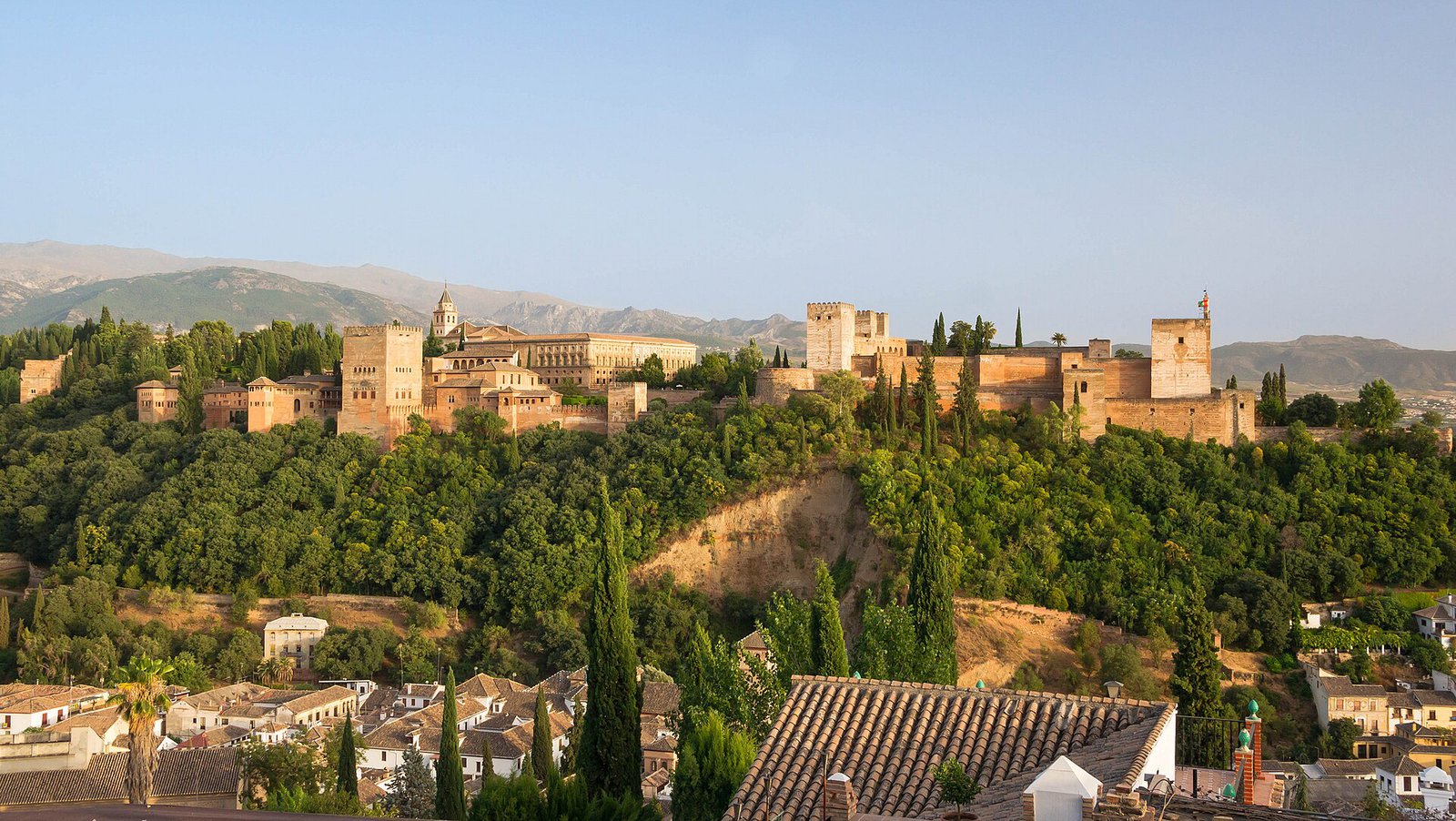
Andalusia and the Mediterranean coast are genuinely dry, especially May to September. If your trip is Seville, Granada, Málaga or the Balearics in summer, rain is unlikely enough that a plan is a formality rather than a necessity.
The Canaries are the driest of all in winter, which is the whole reason to go then.
What to agree before you book
Ask one question in the first message: what happens if the weather is bad on the day?
There are three answers, and they are all legitimate — what matters is that you know which one you have:
- Free reschedule to another date in your trip. The best outcome, and common with photographers who work with travellers.
- Partial refund if the session is cut short or cancelled.
- We shoot anyway. Some photographers prefer this and are right to, for the reasons below.
A photographer who has a clear, immediate answer has done this many times. One who has to think about it has not.
The practical constraint is that a reschedule only works if you have another day. This is the strongest argument against booking your session for the last day of the trip.
The locations that are better in rain
This is the part people do not expect. Several of the strongest locations in Spain are improved by weather everyone else is complaining about:
- The Guggenheim in Bilbao. Titanium under flat cloud is subtle and reads its curves; in strong sun it is a mirror. Overcast is objectively better here.
- Santiago de Compostela. Granite goes silver in soft grey light and harsh under sun. Galician weather suits Galician stone.
- The Albaicín in Granada and any whitewashed old town. Wet cobblestones reflect, colours saturate, and the lanes are empty.
- The Anaga forest in Tenerife. Fog is the entire point of the location.
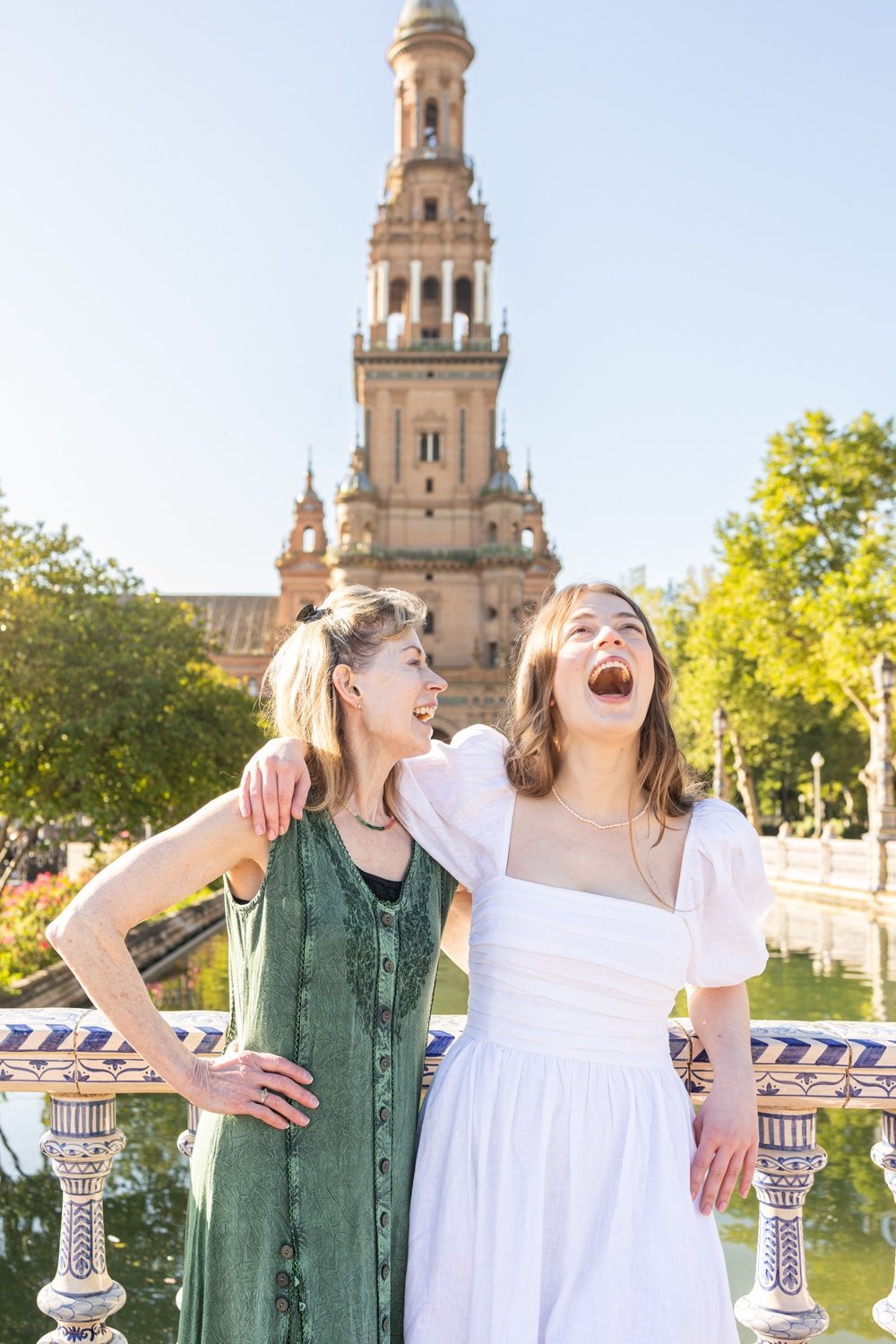
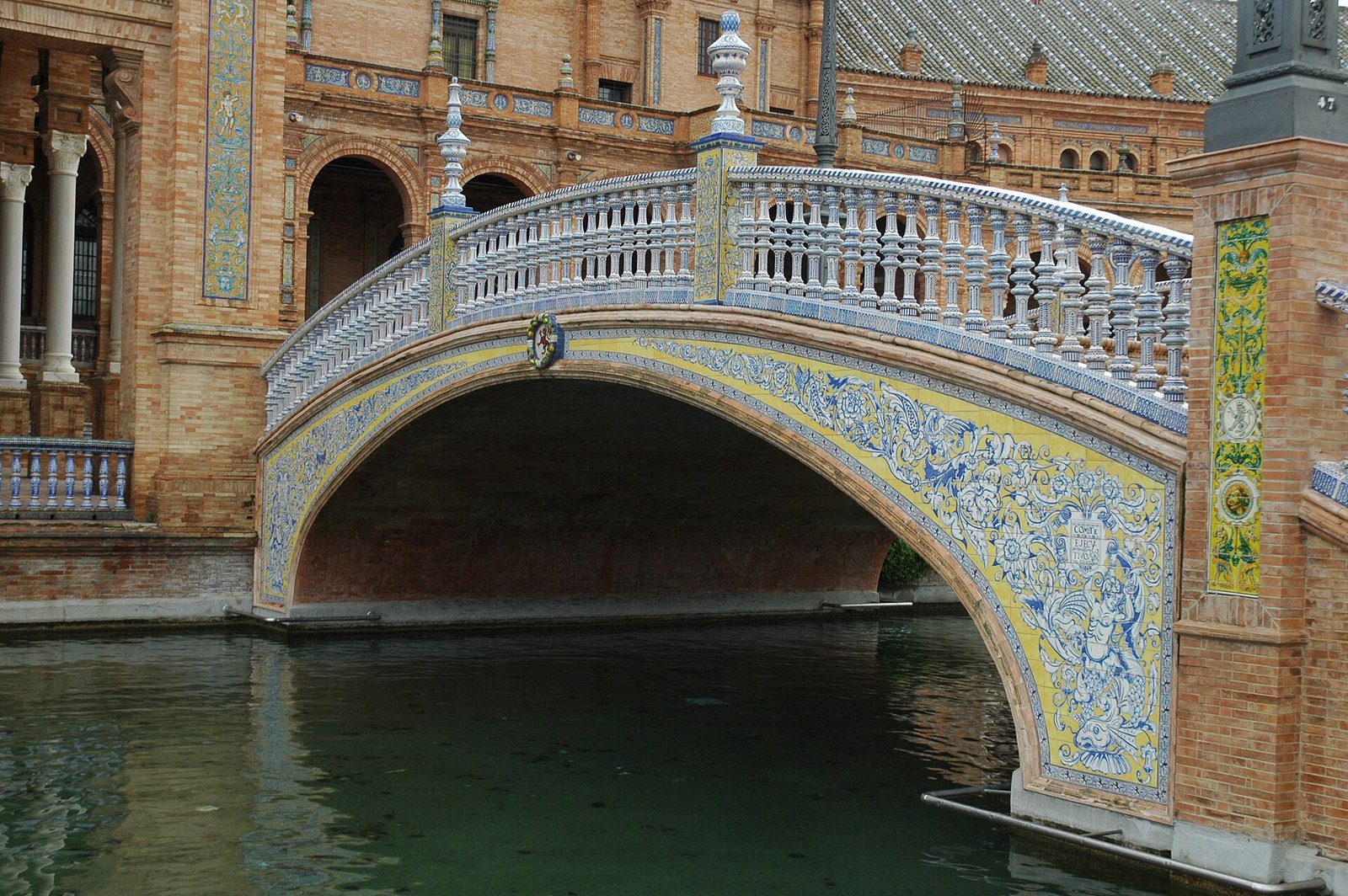
Rain also empties places that are otherwise impossible. The Plaza de España in Seville in light rain, with wet tiles reflecting and nobody in it, is a photograph you cannot get on a sunny day at any hour.
What to do on the day itself
Do not cancel at the first grey sky. Spanish weather moves quickly, and photographers watch the radar rather than the forecast.
Bring one umbrella, ideally plain. A clear or plain-coloured umbrella is a prop. A branded golf umbrella is a problem.
Bring a coat you are happy to be seen in. In the north this is not optional; it will be in the photographs.
Say yes to the covered options. Arcades, colonnades, markets, museum entrances, the Mezquita's interior. Every Spanish city has more roofed public space than people realise.
The honest advice
If guaranteed sun is the priority, choose your region rather than your policy: Andalusia, the Mediterranean coast or the Canaries, in the right months. The seasonal guide covers which is which.
If you want the north, accept that weather is part of the deal, book early in the trip so you have a spare day, and pick a photographer whose portfolio has grey days in it. Someone who only shows golden hour has either been lucky or is showing you a fraction of their work.
The photographers on Photo Spain each set their own terms, including reschedule policy — which is worth reading before comparing prices.
Frequently asked questions
Will my photoshoot be cancelled if it rains?
Not necessarily — there are three legitimate answers, and what matters is knowing which one you have before you book: a free reschedule to another date in your trip, a partial refund if the session is cut short, or "we shoot anyway". Ask "what happens if the weather is bad on the day?" in the first message; a photographer with a clear, immediate answer has done this many times. A reschedule only works if you have another day, which is the strongest argument against booking the session for the last day of the trip.
Where in Spain is rain most likely on a photoshoot?
The north: San Sebastián, Bilbao and Galicia get rain year-round, including in summer, and Santiago de Compostela is one of the wettest cities in Spain. Madrid, Toledo and Segovia get short bursts from November to March. Andalusia and the Mediterranean coast are genuinely dry from May to September, and the Canaries are the driest of all in winter — if guaranteed sun is the priority, choose your region rather than your policy.
Which locations in Spain look better in bad weather?
The Guggenheim in Bilbao, whose titanium reads its curves under flat cloud and turns into a mirror in strong sun; Santiago de Compostela, where granite goes silver in soft grey light; the Albaicín in Granada and any whitewashed old town, where wet cobblestones reflect and the lanes empty; and the Anaga forest in Tenerife, where fog is the entire point. Do not cancel at the first grey sky — Spanish weather moves quickly, and photographers watch the radar rather than the forecast.
Want professional photos in Bilbao?
Browse portfolios, compare packages, and book a verified local photographer in minutes.